Medical researchers look at computer.

Researchers Raise Concerns About Proposed Changes to Science Funding

Under a proposed rule from the White House Office of Management and Budget, political appointees would have more power over hundreds of billions of dollars in discretionary grant funding, diminishing the traditional role of scientific peer reviewers. The rule would require political appointees to review grants before they’re awarded to ensure projects advance the president’s priorities. Carmen Guerra, MD, the Ruth C. and Raymond G. Perelman Professor of Medicine, and AACR President-Elect Robert Vonderheide, MD, DPhil, director of the Abramson Cancer Center, shared their perspectives on how this proposed rule could affect cancer research.

The Golden Age of Pulmonary Embolism Randomized Controlled Trials

Jay Giri, MD, MPH, an associate professor of Cardiovascular Medicine and director of HUP's Cardiovascular Catheterization Laboratories, discussed the evolving landscape of randomized controlled trials in pulmonary embolism (PE). The discussion highlights challenges in PE trial design, the critical importance of clinical deterioration as an endpoint, and why this era represents an unprecedented wave of evidence generation in PE.

Researchers Explore the Growing Role of GLP-1s in Oncology

Several observational studies presented at the 2026 ASCO Annual Meeting linked GLP-1 drugs to improved cancer outcomes. A Penn Medicine analysis of more than 110,000 women found that those taking GLP-1 medications like Ozempic and Wegovy were roughly 30 percent less likely to develop breast cancer than women who weren’t. Elizabeth McDonald, MD, PhD, a professor of Radiology and practicing breast radiologist in the Abramson Cancer Center, presented the findings at the 2026 ASCO Annual Meeting in June.

The Latest on Social Media
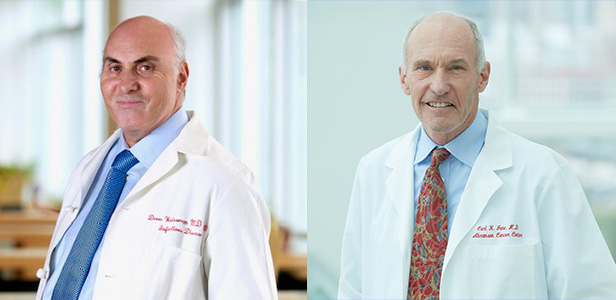
Carl June and Drew Weissman.

Penn Medicine on Facebook

CAR T cells have cured cancer for many patients. But the current treatment process is a laborious (and expensive) one.

CAR T cell therapy pioneer Carl June, MD, has teamed up with Nobel Prize Laureate Drew Weissman, MD, PhD, to explore the possibility of using mRNA vaccines to help a patient's own body create the CAR T cells needed to train the immune system to fight cancer.

Published by the Penn Medicine Department of Communications

Debbie Foster / Interim Associate Vice President for Communications, Penn Medicine

Carol Berman / Senior News Director, Penn Medicine

Office: 215-662-2560

Visit us online:

Please note: Materials included in this message are for internal distribution only. Some materials may be protected by copyright law. Such materials include articles and/or broadcast segments provided to Penn Medicine by media monitoring services. If you wish to post or reuse these materials, you must obtain permission from the original publisher. Wall Street Journal articles are available to paid subscribers only. Communications can provide copies of articles upon request.

To ensure that you will receive these emails, please add [email protected] to your Safe Senders list.

Copyright © 2026 Penn Medicine, All rights reserved. |

facebook
twitter