Hi readers, Cameron Peters here! It's Tuesday morning.
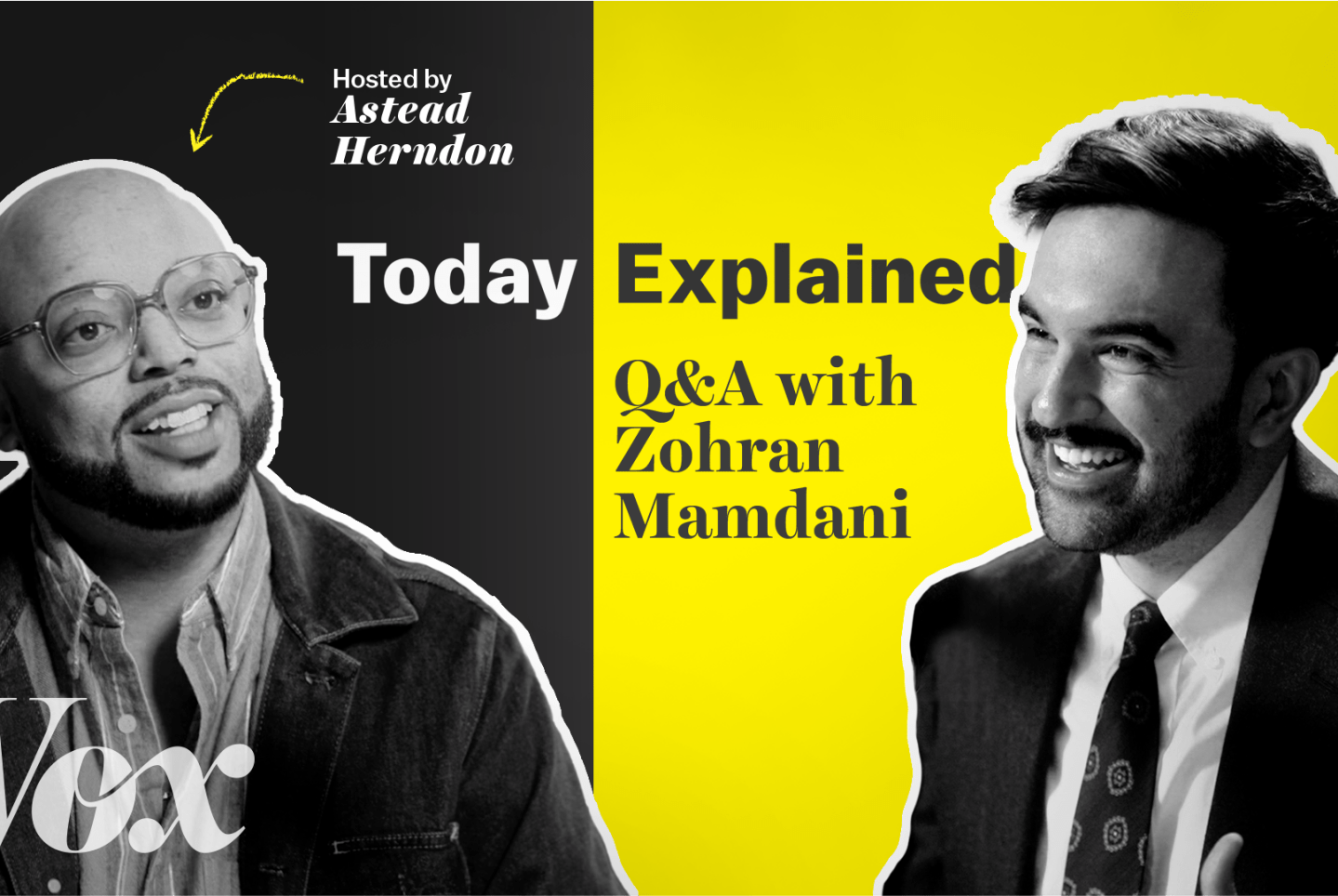
New York City Mayor-elect Zohran Mamdani recently sat down with my colleague Astead Herndon to discuss his mayoral transition and what comes next. With just days to go until Mamdani takes office, we're featuring a portion of that conversation, edited for length and clarity, below: |
|
|
| Astead Herndon
One question I have is: there's so much national and international focus on both the campaign and your administration going forward, but it's such a hyperlocal job. How do you balance what will be the intense attention with the reality of who you're serving? |
|
|
| Zohran Mamdani
You have to remember not just that reality, but the point of this is to serve this city, right? It's not like a reality check. It's the reason why I did this. It's the reason why it was possible to weather difficult moments because it's all in service of a city that I love. There's some days where it's hard to believe that my job is traveling around New York City and meeting New Yorkers and listening to their concerns and having the opportunity to act upon them. And I also think the greatest thing you can do is the power of example, of what you can do, what you can succeed, what you can deliver.
Because what we're talking about right now, the growing sense among New Yorkers that politics is irrelevant to their day-to-day struggles, the inability for our political system to deliver on crises large and small, these are not uniquely New York issues. These are issues that people feel outside of the city, outside of this country, and we have an opportunity to show that by serving New Yorkers, we can also showcase a politics that can serve working people wherever they may be. |
|
|
| Astead Herndon
I want to look ahead. How would you define the priorities for your agenda? What would you define as success or failure for the Mamdani administration? |
|
|
| Zohran Mamdani It comes back to affordability. The priorities have to be the fulfillment. |
|
|
| Astead Herndon Are those the three? Are we talking about buses, child care — What am I missing? |
|
|
| Zohran Mamdani Hit 'em. Come on. |
|
|
| Astead Herndon
Buses, child care, rent freeze, boom. But what about things like the publicly subsidized grocery stores? Is that a priority too? |
|
|
| Zohran Mamdani Yes. I would say that the first order of priorities — like ranking best friends — the first order of priority are the three that we built the campaign around.
There are obviously other commitments we made in addition to that. Five city-owned grocery stores, one in each borough.
The fulfillment of these things are not just critically important because you're fulfilling what animated so many to engage with the campaign, to support the campaign, but also because of the impact it can have on New Yorkers’ lives. There's a lot of politics where it feels like it's a contest around narrative, that when you win something, it's just for the story that you can tell of what you won, but so many working people can't feel that victory in their lives.
The point of a rent freeze is you feel it every first of the month. The point of a fast and free bus is you feel it every day when you're waiting for a bus that sometimes never comes. The point of universal child care is so that you don't have to pay $22,500 a year for a single toddler. These are not things I have to explain the worth of to you, or an intellectual victory. It is a material one. And so to me, when we talk about the struggles of our democracy, when we talk about a withering faith in it as a political system, we have to understand that the withering of that faith is intensely connected to the inability of that system to deliver on the needs of the people of it.
|
|
|
| Astead Herndon
What about political goals? I mean, I was on cable news today, and they're talking about the “Mamdani wing of the Democratic Party,” and they're talking about all challengers facing incumbents and the goal of spreading progressivism, I think specifically socialism, across the country. Is that a goal you share? Do you look out at those challengers and say, that is the Mamdani wing? |
|
|
| Zohran Mamdani
I think that anyone fighting for working people and fighting for a politics that doesn't just think of working people, but puts them at the heart of what it is that we're doing, is critically important anywhere in this country. I think that for me, this is a moment in time where we have to reckon with why people feel this way about politics, and there is oftentimes an inability to reckon with the failures that have come before us because they implicate a lot of what we're doing right now.
|
|
|
| Astead Herndon
But the implication is that part of your political project is to spread across the country and to Congress. Is that? |
|
|
| Zohran Mamdani I mean, part of my political project is to spread the fight for working people everywhere, and I think that can mean new candidates. It can also mean a renewed belief amongst those who are already there to fight. |
|
|
| Astead Herndon
One of the things I also wanted to ask is, it feels like core to the kind of Democratic Party’s questions of moving forward has been to what to take from your campaign. I have heard people say everything from, it's all about social media to kind of separate from the substance. I actually want to read you a quote and have you respond. |
|
|
| Zohran Mamdani Hit me. Is this mean tweets or good tweets? |
|
|
| Astead Herndon
No, no, no. Not tweets at all. Pete Buttigieg just said, “But I think if my party wants to learn lessons from Mamdani's success that are portable to a place like Michigan where I live, it's less about the ideology and more about the message discipline of focusing on what people care about and the tactical wisdom of getting out there and talking to everybody.”
I wanted to know, do you think this is true when we get outside of New York, are we thinking that it's less about the substance of campaign than tactics? Or can we separate those things? |
|
|
| Zohran Mamdani
I don't think you can fully separate the medium and the message. I think that that person is correct, that you have to have a politics that relates to working people's lives and their struggles. It can't be one that needs to be translated. I would also say that yes, there are far more New Yorkers who do not ask me about how I describe my politics and more they ask me, do I fit in that politics?
I also think, however, that if all we did was make videos without a vision and affirmative vision of how working-class New Yorkers could afford this city, then I wouldn't be seated across from you right now.
There are aspects of this campaign that are very much focused on New York City, right? I don't know if there's a rent guidelines board anywhere else in this country that can freeze the rent for more than 2 million tenants. We do have the slowest buses in the country. We do have child care at costs that are astronomical, but the struggle for working people to afford day-to-day life, to afford dignity in the city they call home, that's not New York City-specific.
And what I would say is wherever anyone is, to ask the people around them, what is the example of that struggle in your life, and what are the tools? And then for you as the candidate to think about what are the tools that government has to intervene in that to actually provide relief to that? Because so often politics feels like an exercise in language and ideas that you need to have been at the last meeting to understand this meeting. And you actually need to meet people wherever they are and not explain to them why they should listen to you, but to actually have a vision that is intuitive for the struggles that they're living through.
|
|
|
⮕ Keep tabs
Volatile voters: New polling shows that young men between 18 and 23 — a fickle, contradictory cohort that swung hard to the right in the 2024 election — now strongly disapprove of President Trump, writes Christian Paz.
The year measles came back: As 2025 draws to a close, Dylan Scott chatted with doctors around the country who have seen a spike in the once-eradicated virus. “It’s been a little bit insane,” said one Texas physician.
The Indian American experiment: A wildly successful 60-year-old immigration program saw hundreds of thousands of Indian Americans build lives and careers in the US. Now racist rhetoric and federal visa policies jeopardize all that. [NYT]
Rethinking rest: New research on stress and the brain is changing how neuroscientists understand rest — an especially relevant topic for that weird, sluggish interregnum between Christmas and New Year’s. [New Scientist] |
|
|
The Vox Membership program is getting even better with access to Vox’s Patreon, where members can unlock exclusive videos, livestreams, and chats with our newsroom.
Become a Vox Member to get access to it all. |
|
|
| A sit-down with Zohran Mamdani |
New York City's Democratic socialist mayor takes office on January 1. Can he follow through on all those campaign promises? We ask him.
|
|
|
Love them, loathe them, or politely tolerate them on behalf of your corny loved ones and friends, Hallmark Christmas movies and their assorted knock-offs are officially staples of the holiday season. The Hallmark Channel has aired more than 300 holiday movies in the last 25 years, each following a fascinatingly specific formula. And as the data in this report attests, that formula is really working for millions of viewers.
|
|
|
Today’s edition was produced and edited by me, staff editor Cameron Peters, and senior writer Caitlin Dewey. Thanks for reading! |
|
|
Are you enjoying the Today, Explained newsletter? Forward it to a friend; they can sign up here. And as always, we want to know what you think. Let us know by filling out this form or just replying to this email.
|
|
|
|