Plus: The deaths ICE will stop reporting, screwworms, and AI children's books.

View this email in your browser   

đź‘‹  Did this email get forwarded to you? Sign up here to get Today, Explained daily.

Today, Explained

the newsletter


June 8, 2026


Hi readers, happy Monday! I hope you had a great weekend. 

Today, we’re tackling a big question: What is it that makes human-made art irreplaceable, even when quickly improving AI means it’s very replicable? 

As my colleague Constance Grady writes, this is a lesson we’ve learned before — and it all goes back to the invention of the camera, which didn’t manage to displace fine art either. Read on for more:

Cameron Peters, staff editor


Cameron Peters, staff editor


⮕ Start here

Why AI will never replace human-made art

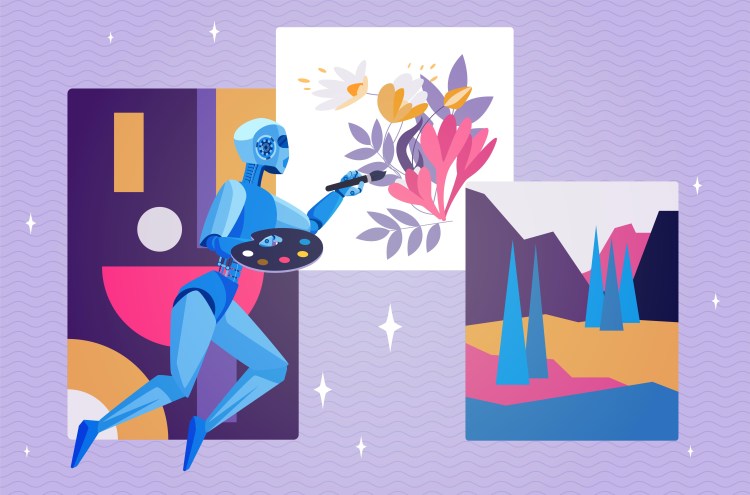
An illustration shows a robot hovering in front of a lavender wall, wielding a paintbrush at three separate canvases.

Andrew Harnik/Getty Images

Constance Grady is a senior correspondent at Vox.


Constance Grady is a senior correspondent at Vox.


As AI continues to encroach on every aspect of our lives, there is a persistent fear or hope, depending on your angle: AI will someday take over art. The internet is full of quizzes showing that most lay people cannot tell the difference between AI-generated art (digital pictures of paintings, prose) and the real thing. Multiple studies have shown that when people are shown AI-generated art and human-made art, but are not told which is which, they tend to prefer the AI-generated art, whether it be images, poetry, or prose. 


Yet what’s striking is that despite this disparity, people still consistently say that human-made art is what they want. 


In one study published in 2023, participants were shown a series of images, each randomly labeled “AI-made” or “human-made.” Participants rated the images they thought were machine made as worse than the images they thought had been created by a human artist — even when those were actually human-made. 


One conclusion you might draw here is that the widespread disdain for AI-generated art is empty snobbery. If human-made art were so much better, the argument goes, then people would be able to see a real difference. 


This line of thinking relies on the belief that “good” art is something that many people find appealing, at least in a vacuum. At this point, AI has automated that generation fairly successfully. At some point, it may get even better at it. 


But I don’t think those study participants were lying when they said they wanted human-made art, even if they couldn’t tell the difference. Even if we get to a future in which AI’s persistent glitches are ironed out, so that there are no more missing fingers and garbled sentences, and AI-generated images and music and poetry and prose and film are completely indistinguishable from the best a human can produce, even to highly trained experts — even then, I think people would still keep saying they would rather experience art made by humans. And even in such a world, I don’t think they would be lying. 


The pleasure of art is specifically related to the human mind on the other side of the product. When we’re told that the mind on the other side is a machine, many of us don’t want to engage anymore.


That loss of interest matters. It is consistent. It has happened before in the history of art. 


Two hundred years ago, another new technology emerged that was capable of automating the technical skills many people at the time would have considered one of art’s fundamental functions: the camera. It could capture a likeness perfectly and very quickly, in a moment when almost all of visual arts were organized around capturing a likeness. 


The camera changed the way paintings were produced and ultimately valued, but it did not replace the medium entirely — and the reasons why can help explain why AI-generated art won’t replace human-made art, either. 


You can read Constance’s full story on the Vox site here.

 
 
Learn more about OpenWeb
 

⮕ Keep tabs


Data goes dark: ICE will stop reporting deaths that occur shortly after detainees are released from its custody, the Washington Post scoops, reversing a Biden-era policy. The agency is already on course to report a record-high number of deaths in custody. [Washington Post]


Not now, screwworm! The US has something new to worry about after a New World screwworm was found in Texas last week. The worm is seriously disturbing and poses a serious threat to livestock; if it spreads, it could drive beef prices even higher in the US. [Vox]


Bookslop: Speaking of AI and art, here’s another thing it can’t do: write children’s books. But that doesn’t mean people aren’t trying, Alex Abad-Santos reports. [Vox]


Long haul: Forget 80 days. Ultraendurance cyclist Lael Wilcox is preparing to set a new world record by circumnavigating the globe (minus some oceans) in just 78. [New York Times]


Enjoying Today, Explained?

Your membership funds the reporting behind this newsletter. If you read us regularly, it’s the best way to keep it going.

BECOME A MEMBER
 

🎧 Listen in

Listen

The Ferrari of electric vehicles

Ferrari is about to drop an almost $700,000 electric vehicle on the market. It has even fewer fans than the typical EV.

Listen now
 

đź”— Click here

Here’s how those “I’m not a robot” checkboxes actually work — and what “reCAPTCHA” stands for, anyway. 

Today’s edition was produced and edited by me, Cameron Peters. Thanks for reading! 


Are you enjoying the Today, Explained newsletter? Forward it to a friend; they can sign up here. And as always, we want to know what you think. Let us know by filling out this form or just replying to this email. 


Learn more about OpenWeb
FacebookTwitter YouTubeInstagramTikTok WhatsApp

This email was sent to [email protected]. Manage your email preferences or unsubscribe. If you value Vox’s unique explanatory journalism, support our work by becoming a Vox Member.


View our Privacy Notice and our Terms of Service.


Vox Media, 1701 Rhode Island. NW, Washington, DC 20036.
Copyright © 2026. All rights reserved.