In just 10 days over the summer of 1854, 500 people died of cholera in the Soho neighborhood of London. The city’s population had more than doubled to 2.3 million people in the first half of the 1800s, and its sewage system could not keep up. But the streams of human waste flowing into the street and seeping into the water supply were considered unconnected to the cholera crisis. The prevailing theory of the day was that bad air — miasma — caused illness.
The English physician John Snow thought differently. Five years before the outbreak, he suggested that the diarrheal disease was actually caused by a waterborne infection rather than miasma. He soon had a chance to test his theory, mapping the location of cholera-related deaths in Soho. Snow realized that the victims used one specific water pump on Broad Street, and he persuaded city officials to remove the pump’s handle to prevent anyone else from using it. With the source eliminated, the outbreak, which had already passed its peak, ended in days.
Though it took years for Snow’s theory to achieve widespread acceptance, his approach is central to modern epidemiology. Investigating the source of outbreaks can prevent new cases, gives us a better understanding of diseases, and helps us develop strategies for responding to future outbreaks.
Two recent outbreaks have demonstrated the necessity — and the challenges — of such investigations, almost two centuries after Snow’s pioneering work.
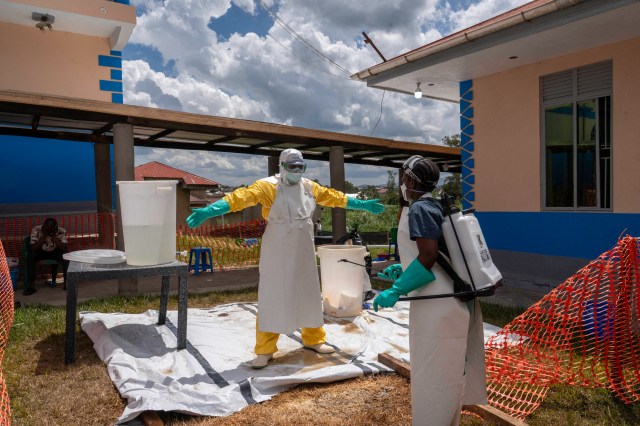
The first was the hantavirus outbreak that dominated headlines last month. Then, on May 17, the World Health Organization (WHO) declared a public health emergency of international concern — the highest level of global health alert — in response to an outbreak of the deadly hemorrhagic disease Ebola in the Democratic Republic of the Congo (DRC). It’s since become one of the largest ever Ebola outbreaks on record.
The first confirmed case, a healthcare worker in Bunia, DRC, died on April 24, but the outbreak may have been spreading undetected since as early as January. Investigators haven’t identified patient zero — the index case — and still don’t know how this outbreak began.
Part of the challenge is that the current outbreak is caused by the Bundibugyo strain of Ebola, which is relatively uncommon and has a genome about 30 percent different from the Ebola viruses that usually spark outbreaks. Testing for more common variants didn’t pick up the Bundibugyo virus right away, and ongoing conflict in the DRC contributed to the delay and continues to make contact tracing difficult. Unlike other strains, the Bundibugyo virus has no approved therapeutics or vaccines.
In the past, researchers have had some success identifying the index case of Ebola outbreaks. Investigators managed to identify the first patient of the 2014-2016 West Africa Ebola epidemic — the largest and deadliest in history, with more than 15,000 confirmed cases and 11,000 deaths — as a toddler in the west African nation of Guinea.
What’s harder to definitively determine is how the boy, who died in December 2013 before the outbreak had been identified, contracted it. It’s possible that he came into contact with an Ebola-infected fruit bat or its droppings while playing in a hollow tree, but scientists can’t say for sure.
Investigating outbreak origins is inherently fraught and can lead to the international finger-pointing that characterized much of the Covid-19 pandemic. But it’s not primarily about assigning blame. Instead, knowing where and how outbreaks began informs how we respond to them, halts transmission, communicates to the public, and prevents them from happening again. It can identify high-risk regions and influence how public health officials monitor a disease.
As the recent Ebola and hantavirus outbreaks demonstrate, however, that effort is often complicated by a host of factors, and the resulting uncertainty makes it that much harder to manage public health concerns efficiently and well — which is a problem, because, unless we can determine where and how outbreaks began, we’ll be ill-equipped to stop them when they crop up again.
Read Shayna’s full story here.