Plus: the Pentagon vs. the Mormons, new sunscreen, and the very best bird names.

View this email in your browser   

đź‘‹  Did this email get forwarded to you? Sign up here to get Today, Explained daily.

Today, Explained

the newsletter


June 10, 2026


Weird place, Maine. (I mean that with affection.) Vacationland is, demographically speaking, the very oldest state in the nation. It’s one of only four states that ban billboards. It’s the country’s only major source of wild blueberries. And Maine’s the only state that consistently votes for Democrats in presidential elections, but has not had a Democratic senator since the 1990s. (Sen. Angus King caucuses with the Democrats, but he’s an independent.)

Democrats really want to change that in November; flipping Sen. Susan Collins’s seat would go a long way to helping them retake the chamber. But the state’s polarizing Democratic candidate, Graham Platner — who easily and officially won Maine’s Democratic primary last night — has been buffeted by questions about his character and personal behavior. 

This morning, my colleague Andrew Prokop joins us to discuss what that means for the quest to take back the Senate — and for the future of the Democratic Party, as a whole. Platner represents a distinct vision for that future. And it doesn’t sit well with everyone.

Caitlin Dewey, senior writer


Caitlin Dewey, senior writer


⮕ Start here

Democrats’ Graham Platner gamble

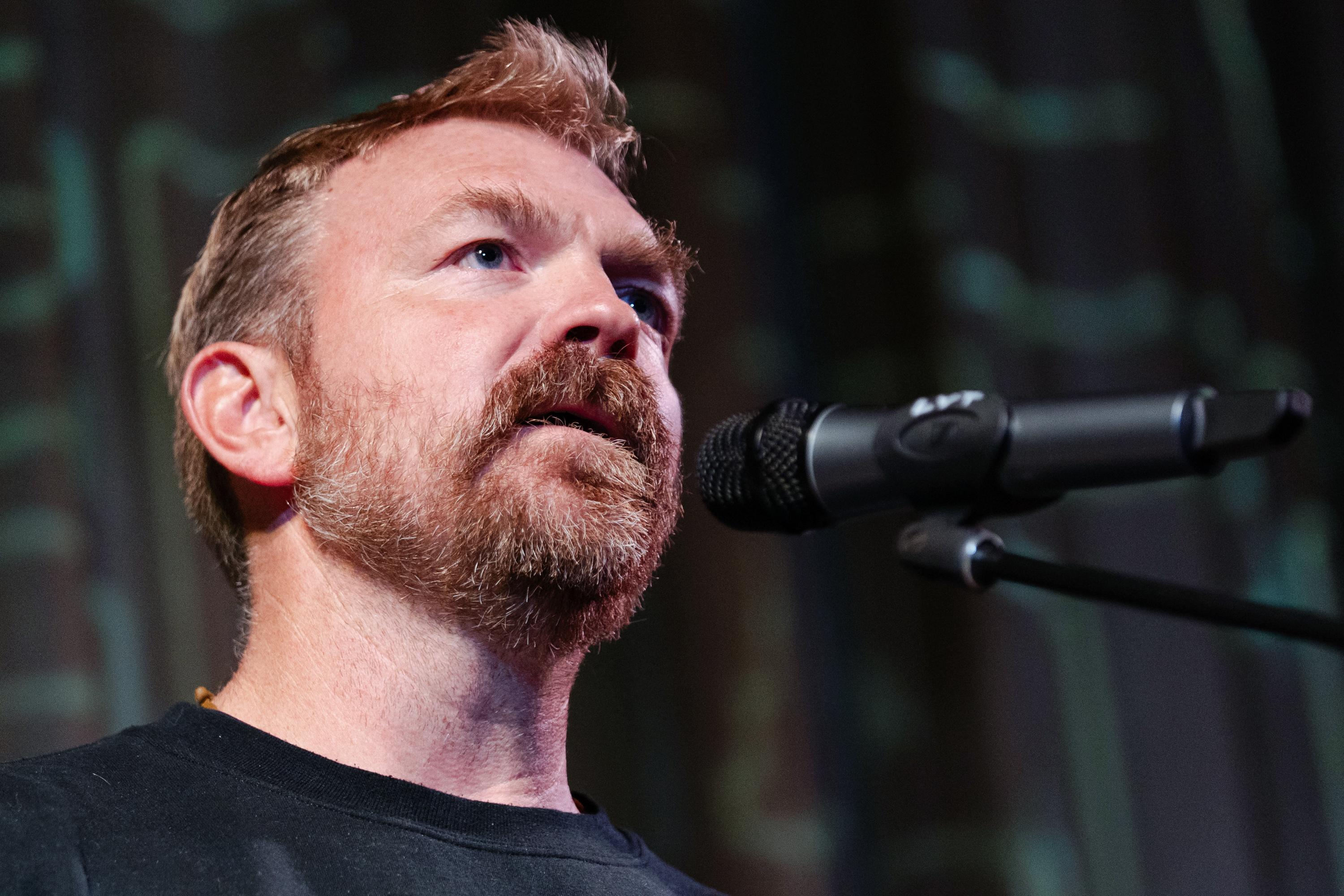
Graham Platner speaks into a microphone.

Sophie Park/Getty Images

Andrew Prokop is a senior politics correspondent at Vox.


Andrew Prokop is a senior politics correspondent at Vox.


Graham Platner’s primary victory in Maine means Democrats officially have their candidate in a race that is pivotal for their hopes of retaking the Senate.


But Platner isn’t a typical Democratic nominee. For reasons both personal and political, his candidacy has captivated national attention and become arguably the most-covered race happening this year.


First off, he is indisputably a fresh (bearded) face for the party — a 41-year old populist who’s never run for anything before, who’s worked as an oyster farmer, and who presents as having a tough-guy affect. 


Simultaneously, Platner is a guy with some messy personal history — a Nazi skull tattoo, crude Reddit posts, volatile past relationships, drinking, and sexting other women while married. A fresh round of these reports in recent weeks has heightened Democrats’ fears about his general election chances.


And finally, there’s the fact that Platner is a player in a bitter factional struggle inside the Democratic Party, where he’s aligned with a left socialist faction that is trying to supplant the existing establishment.


Over the past decade, this left faction has powered Sen. Bernie Sanders to two second-place presidential primary campaigns, brought “The Squad” to the House of Representatives, and elected New York City Mayor Zohran Mamdani — whose top strategist, Morris Katz, is also Platner’s. 


What they haven’t really done is beat a formidable Republican in a high-profile general election — like this one, against five-term Sen. Susan Collins. And these activists’ choice of an inexperienced outsider in Platner cuts against the conventional wisdom of who can win such a race. 


Party leaders prefer to nominate credentialed politicians with a proven track record of electoral success. That’s what they’ve done in other key Senate races like North Carolina, Ohio, and Alaska. And that’s what they tried to do in Maine, by actively recruiting two-term Gov. Janet Mills to run — but the race got away from them.


Mills was a 78-year old two-term governor whose popularity had been dropping and who ran a low-energy campaign after waffling for months on whether to run. Platner was nearly four decades younger, an outsider, and promising to take on both parties’ establishments. There were elements of class and gender politics to his perceived appeal too, since there’s been much handwringing in recent years about whether Democrats have lost the ability to connect with the working class and with men generally.


Platner’s campaign caught fire, becoming a viral phenomenon, and he amassed such a polling lead that Mills suspended her campaign in April, making Tuesday’s primary largely a formality. 


He clearly struck a chord among Maine Democratic voters — going beyond his core of support among the pro-Bernie base. 


“He’s taken stances on the far left of the party, but I think even more important than that has been his persona and the approach,” Mark Brewer, a political scientist at the University of Maine, told me. “He’s anti-establishment; he’s not politics as usual. He’s going to take a sledgehammer to the establishment. I think for a lot of Democrats in Maine and nationwide, that’s the kind of mood they’re in.”


Read Andrew’s full story here. 

 
 
Learn more about OpenWeb
 

⮕ Keep tabs


Pete Hegseth vs. the Mormons: Do members of the Church of Jesus Christ of Latter-day Saints qualify as Christians? The Department of Defense recently (and accidentally) weighed in on a controversial theological division. [Vox]


The president who cried "deal": President Donald Trump has claimed 37 times in the past two months that the US and Iran were close to ending the war. Summarizes CNN's Aaron Blake: "It’s clearly not a claim people should take seriously anymore." [CNN]


Sew confused: A viral video claimed that Adidas exploited Indigenous Mexican artisans to make special-edition World Cup jerseys. The artisans involved tell a different story. [New York Times]


New sunscreen just dropped: The FDA finally approved bemotrizinol, or BEMT, a sunscreen ingredient that's been available in Europe and Asia for years. Advocates are hoping it will revive consumers' faith in sunscreen following recent safety scares. [Vox]


Enjoying Today, Explained?

Your membership funds the reporting behind this newsletter. If you read us regularly, it’s the best way to keep it going.

BECOME A MEMBER
 

🎧 Listen in

Listen

America's birthday blues 

America's 250th birthday party has gotten political. So did its last big one.

Listen now
 

đź”— Click here

The purported "best bird names of all time" include the supertramp fantail, hoary puffleg and diabolical nightjar. And no, I don't know what use you could possibly have for that information.

Today’s edition was produced and edited by me, Caitlin Dewey. Thanks for reading! 


Are you enjoying the Today, Explained newsletter? Forward it to a friend; they can sign up here. And as always, we want to know what you think. Let us know by filling out this form or just replying to this email. 


Learn more about OpenWeb
FacebookTwitter YouTubeInstagramTikTok WhatsApp

This email was sent to [email protected]. Manage your email preferences or unsubscribe. If you value Vox’s unique explanatory journalism, support our work by becoming a Vox Member.


View our Privacy Notice and our Terms of Service.


Vox Media, 1701 Rhode Island. NW, Washington, DC 20036.
Copyright © 2026. All rights reserved.