Plus: AI socialism, SCOTUS's Planned Parenthood vendetta, and understanding $1 trillion.

View this email in your browser   

đź‘‹  Did this email get forwarded to you? Sign up here to get Today, Explained daily.

Today, Explained

the newsletter


June 15, 2026


Happy belated birthday to President Donald Trump, who yesterday got the second-best gift an unpopular wartime president could ask for: a much-trumpeted deal with Iran that extends the present ceasefire, reopens the Strait of Hormuz, and — hopefully — brings the two sides one step closer to ending the war.

The first-best gift would have been a more comprehensive deal that also addressed Iran's nuclear capabilities, of course. But that issue has been kicked down the road for future negotiations.

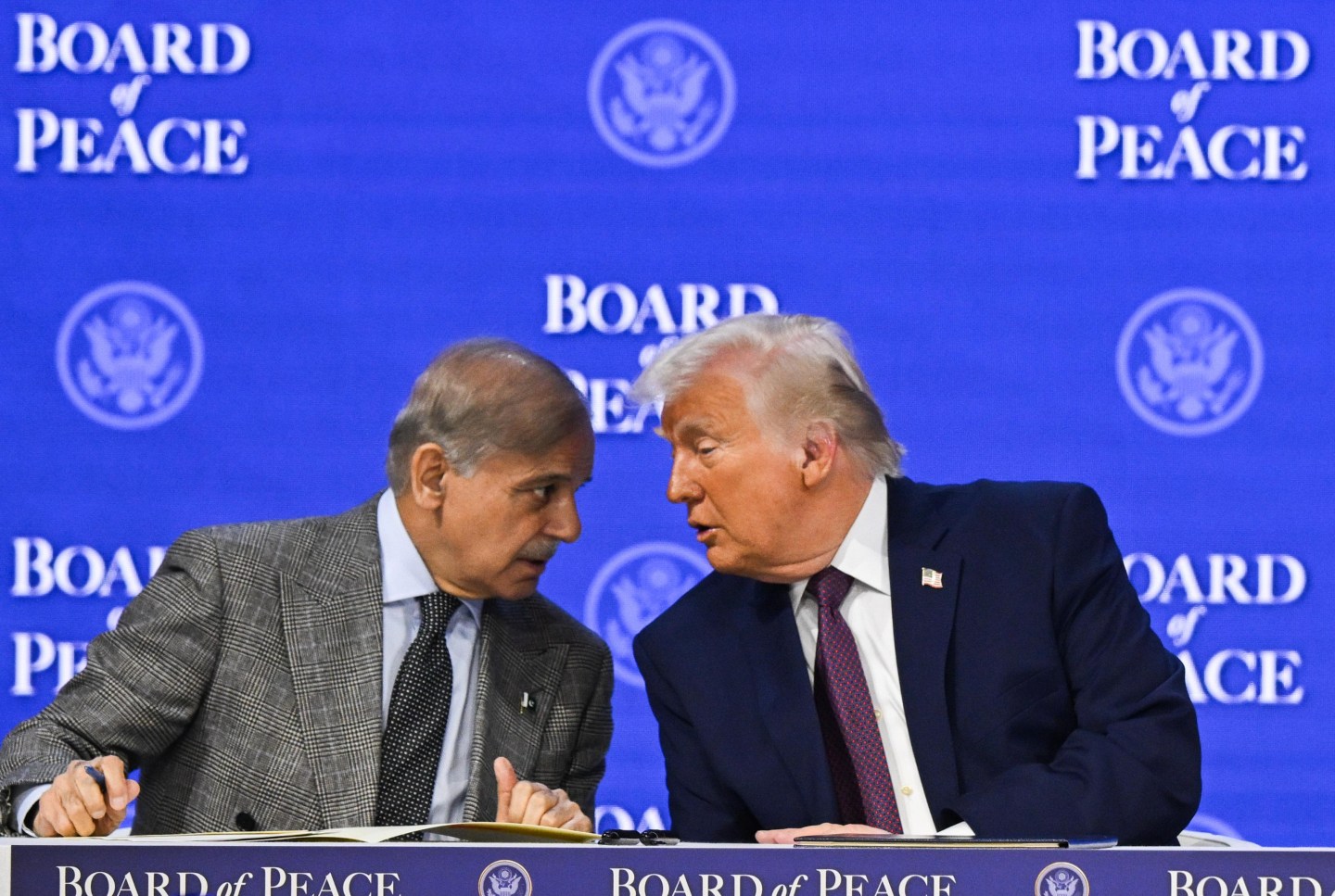
We'll have much more on the agreement and the reaction to it soon — details are still trickling out this morning. In the meantime, however, I'd like to draw your attention to one fascinating aspect of the negotiations that yielded this deal: the outsize role of Pakistan. As my colleague Joshua Keating writes, Pakistan has become an "indispensable partner" to Trump, with major consequences for foreign policy. And that influence is on full display this morning.

Caitlin Dewey is a senior writer at Vox.


Caitlin Dewey is a senior writer at Vox.


⮕ Start here

Trump's most surprising ally

Harun Ozalp/Anadolu via Getty Images

Joshua Keating is a senior correspondent at Vox.


Joshua Keating is a senior correspondent at Vox.


Even before we see the full details of President Donald Trump's deal to reopen the Strait of Hormuz and, perhaps, finally bring the 2026 US-Iran conflict to a close, it’s already clear that one of the more surprising developments of the conflict has been the prominent role of Pakistan as a mediator.


It was Pakistan’s military leader, Field Marshal Asim Munir, who served as the key go-between in the talks that led to the initial two-week US-Iran ceasefire in early April, and Prime Minister Shehbaz Sharif who announced that it had gone into effect. Several days later, Islamabad hosted the highest level talks between the US and Iranian governments since 1979, including US Vice President JD Vance. On April 21, Trump announced the ceasefire had been extended, saying it was at Pakistan’s request. And it was Sharif who posted the news of this latest agreement online, even before President Trump did. 


Whereas the “P5+1” countries of the UN Security Council — the US, China, the UK, France, and Russia, plus Germany — helped bring about the 2015 Iran nuclear deal, and Oman hosted the US-Iran talks in the lead-up to the war, Pakistan has been the intermediary and negotiating venue of choice since the conflict began. The world’s only predominantly Muslim nuclear power is a rare country with credibility on both sides of this war.


Pakistan’s prominent diplomatic role in the conflict is the latest sign of the unexpectedly close relations between the country’s government and the second Trump administration. “Thank you to Pakistan and its great prime minister and field marshal, two fantastic people!” Trump wrote in a characteristic Truth Social post in April. He has lavished particular praise on Munir, whom he has called an “exceptional man” and “my favorite field marshal.”


Pakistan’s new role as an indispensable US partner is partly due to some skilled Trumpian diplomacy by its government and partly due to just how much this administration’s global priorities have changed from the days when China and jihadist terrorism were the top of the agenda.


Read Josh's full story here.

 
 
Learn more about OpenWeb
 

⮕ Keep tabs


Our AI company: Eric Levitz breaks down President Donald Trump’s strange flirtation with AI socialism — partial government ownership of flagship AI companies — and whether there’s actually something to it. [Vox]


Legal Calvinball: A recent Supreme Court decision about securities law only strengthens the case that the Court is going out of its way to screw over Planned Parenthood. Ian Millhiser explains why. [Vox]


“Living in a world we are not built to understand”: Elon Musk became the world’s first trillionaire on Friday when his spaceflight (and AI) company SpaceX went public. As the Wall Street Journal breaks down, our brains just aren’t equipped to understand how much money that is. [WSJ]


Sweet tooth: It’s not just you: Fruit is really getting sweeter, the Atlantic reports. Here’s why — and what it means for the more tart, complex fruit of yore. [The Atlantic]


Enjoying Today, Explained?

Your membership funds the reporting behind this newsletter. If you read us regularly, it’s the best way to keep it going.

BECOME A MEMBER
 

🎧 Listen in

Listen

YouTube at the movies

It's blockbuster season, but low-budget horror films from YouTubers — like Iron Lung, Obsession, and Backrooms — are what's got Hollywood talking.

Listen now
 

đź”— Click here

Whether or not you saw Steven Spielberg’s new movie Disclosure Day over the weekend, don’t miss this remarkable oral history of his career from Vulture.

Today’s edition was produced and edited by Caitlin Dewey and Cameron Peters. Thanks for reading! 


Are you enjoying the Today, Explained newsletter? Forward it to a friend; they can sign up here. And as always, we want to know what you think. Let us know by filling out this form or just replying to this email. 


Learn more about OpenWeb
FacebookTwitter YouTubeInstagramTikTok WhatsApp

This email was sent to [email protected]. Manage your email preferences or unsubscribe. If you value Vox’s unique explanatory journalism, support our work by becoming a Vox Member.


View our Privacy Notice and our Terms of Service.


Vox Media, 1701 Rhode Island. NW, Washington, DC 20036.
Copyright © 2026. All rights reserved.