Plus: The police acting as ICE agents, death by firing squad, and some truly monumental folk art.

View this email in your browser   

👋  Did this email get forwarded to you? Sign up here to get Today, Explained daily.

Today, Explained

the newsletter


June 18, 2026


Elon Musk officially became the world’s first trillionaire just under a week ago, when his rocket company SpaceX held its record-breaking IPO.

If history is any indication, Musk will use his grotesque, mind-boggling wealth to bankroll another presidential campaign, buy yet another private jet, or support his rapidly growing brood of children. He will probably not donate it to charity, because Musk is a stingy philanthropist.

But let’s imagine an alternate timeline — a better timeline — in which the tycoons and titans among us voluntarily parted with their money for the public good. In that timeline, Musk and his trillions could change the world. 

This morning, my colleague Sara Herschander is running down 10 huge social problems that $1 trillion could solve — a list that, for me, is both deeply edifying (because these sprawling problems are quantifiable) and infuriating (because no one with a large enough checking account has bothered to solve them).

Caitlin Dewey, senior writer


Caitlin Dewey, senior writer


⮕ Start here

10 better uses for Elon Musk's fortune

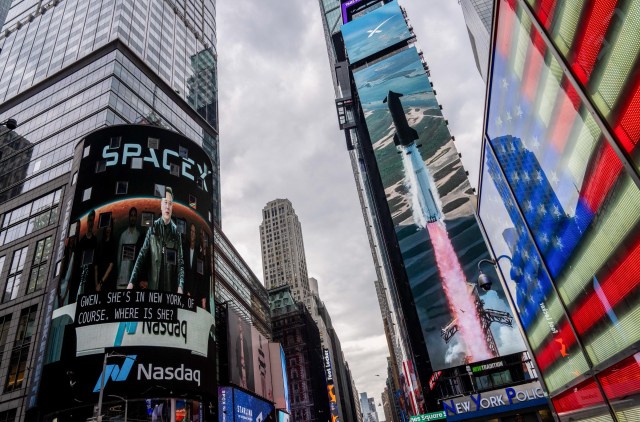
New York's Times Square, with images of Elon Musk and a SpaceX rocket displayed on giant video billboards.

Adam Gray/Bloomberg

Josh, a thin, balding  white man with a thick brown beard, wears a neutral expression, and a blue dress shirt.

Sara Herschander is a fellow for Future Perfect.

Josh, a thin, balding  white man with a thick brown beard, wears a neutral expression, and a blue dress shirt.


Sara Herschander is a fellow for Future Perfect.


Elon Musk once pledged to donate most of his fortune…but conveniently never followed through. In recent years, the tech trillionaire has given only a miniscule fraction of his net worth to charity, much of it funneled through a secretive, thrice-audited foundation. 


It seems unlikely that this latest windfall will usher in some Dickensian awakening for Musk. But if it did, here are a few things he could do with his (hundreds of) billions:


1. Pull hundreds of millions of people out of extreme poverty. According to an analysis released last year, it would cost just $318 billion annually to put an end to the worst form of poverty worldwide. By distributing just over one-quarter of his fortune, Musk could ensure that one-eighth of the world’s population had adequate food, safe shelter, and clean drinking water.


2. Pay off all medical debt in the United States. About 1 in 3 Americans has a past-due medical bill — the kind of entirely involuntary, often predatory debt that can quickly turn a cancer diagnosis into bankruptcy. In sum, Americans owe roughly $220 billion in medical debt, which prompts some to avoid care entirely.


3. Bankroll universal preschool. There’s growing momentum for universal preschool programs, which — when implemented well — can have major benefits for kids and working families. The price tag for building such a program nationally? About $351 billion over 10 years, according to economists at the University of Pennsylvania. 


4. Climate-proof the world. Climate change will cause dangerous heat waves, droughts, and rising sea levels around the world. But billions of people live in low- or middle-income countries that can’t afford the kinds of cooling systems, flood protection, and irrigation infrastructure they need to stay safe in extreme weather. Just half of Musk’s wealth — which totals $1.4 trillion — would be enough to protect everyone from the worst climate hazards.


5. End world hunger. The United Nations estimates it would cost about $93 billion annually to end global hunger by 2030, for a total cost of $465 billion (or about a third of Musk’s net worth).


6. Give everyone clean drinking water. Over 4 billion people lack access to safe drinking water at home, which puts them at risk for waterborne diseases such as cholera and dysentery. Installing better pipes, filtration systems, and well networks for everyone would cost about $114 billion per year, according to the UN.


7. End homelessness in America. Most estimates put the cost of ending homelessness at somewhere between $10 billion and $30 billion each year. If that seems too modest, Musk could also make an enormous dent in the broader housing shortage by constructing 2 million homes to close the supply gap. That would cost $95 billion over five years, according to the Council for American Progress.


8. Wipe out tuberculosis. Tuberculosis is the world’s deadliest infectious disease, killing about 1.5 million people each year. Eradicating tuberculosis by 2030 would cost about $250 billion.


9. Research cures for cancer and other diseases. In 2023, the US invested about $993 billion in research and development, which includes new medical breakthroughs. With his wealth, Musk could more than replace the billions in federal science funding that the Trump administration cut under DOGE.


10. Give everyone on earth a check. Here’s a simple one: If Musk divided $1.2 trillion of his $1.4-trillion fortune among the world’s 8.2 billion people, everyone would receive a $146 check. (Musk himself would still have $200 billion left.) In the US, $146 is enough for a week or so of groceries or most of an annual Netflix subscription. 


But in other countries, a check like that could be life-changing. In Zambia, where most people live on less than $2 per day, even that tiny slice of Musk’s pie could cover months of necessities, school fees, and housing costs.


Instead, Musk is joking about building a supervillain lair under a volcano. 

 
 
Learn more about OpenWeb
 

⮕ Keep tabs


De facto ICE agents: Law enforcement agencies in 31 states now participate in a federal immigration enforcement program that deputizes local police to question and detain undocumented people — almost like ICE agents. [New York Times]


Nitrogen gas and firing squads: Two recent Supreme Court decisions suggest the court may — may, in some very particular circumstances — be softening its position on capital punishment. [Vox] 


The unbeatable (?) Susan Collins: Collins, the five-term Republican senator from Maine, has repeatedly rebuffed Democratic challengers even as her state became increasingly blue. It's not at all clear if Graham Platner will be the one to finally topple her. [Slate]


The big problem with pet snakes: From 2018 to 2024, the number of US households that own a pet snake rose from 810,000 to 1.3 million. And keeping all those extra snakes requires millions more factory-farmed mice to feed them. [Vox]


Enjoying Today, Explained?

Your membership funds the reporting behind this newsletter. If you read us regularly, it’s the best way to keep it going.

BECOME A MEMBER
 

🎧 Listen in

Listen

Iran won the war

Deal or no deal? Doesn’t matter. The war on Iran has irrevocably transformed the country and the region.

Listen now
 

🔗 Click here

The folk artist Jerry Gretzinger, 84, has spent most of his adult life working on a gigantic, dynamic, hand-drawn map of an imaginary landscape. He and a team of volunteers recently assembled and exhibited the whole amazing thing for the first time in over a decade. 

Today’s edition was produced and edited by me, Caitlin Dewey. Thanks for reading! 


Are you enjoying the Today, Explained newsletter? Forward it to a friend; they can sign up here. And as always, we want to know what you think. Let us know by filling out this form or just replying to this email. 


Learn more about OpenWeb
FacebookTwitter YouTubeInstagramTikTok WhatsApp

This email was sent to [email protected]. Manage your email preferences or unsubscribe. If you value Vox’s unique explanatory journalism, support our work by becoming a Vox Member.


View our Privacy Notice and our Terms of Service.


Vox Media, 1701 Rhode Island. NW, Washington, DC 20036.
Copyright © 2026. All rights reserved.