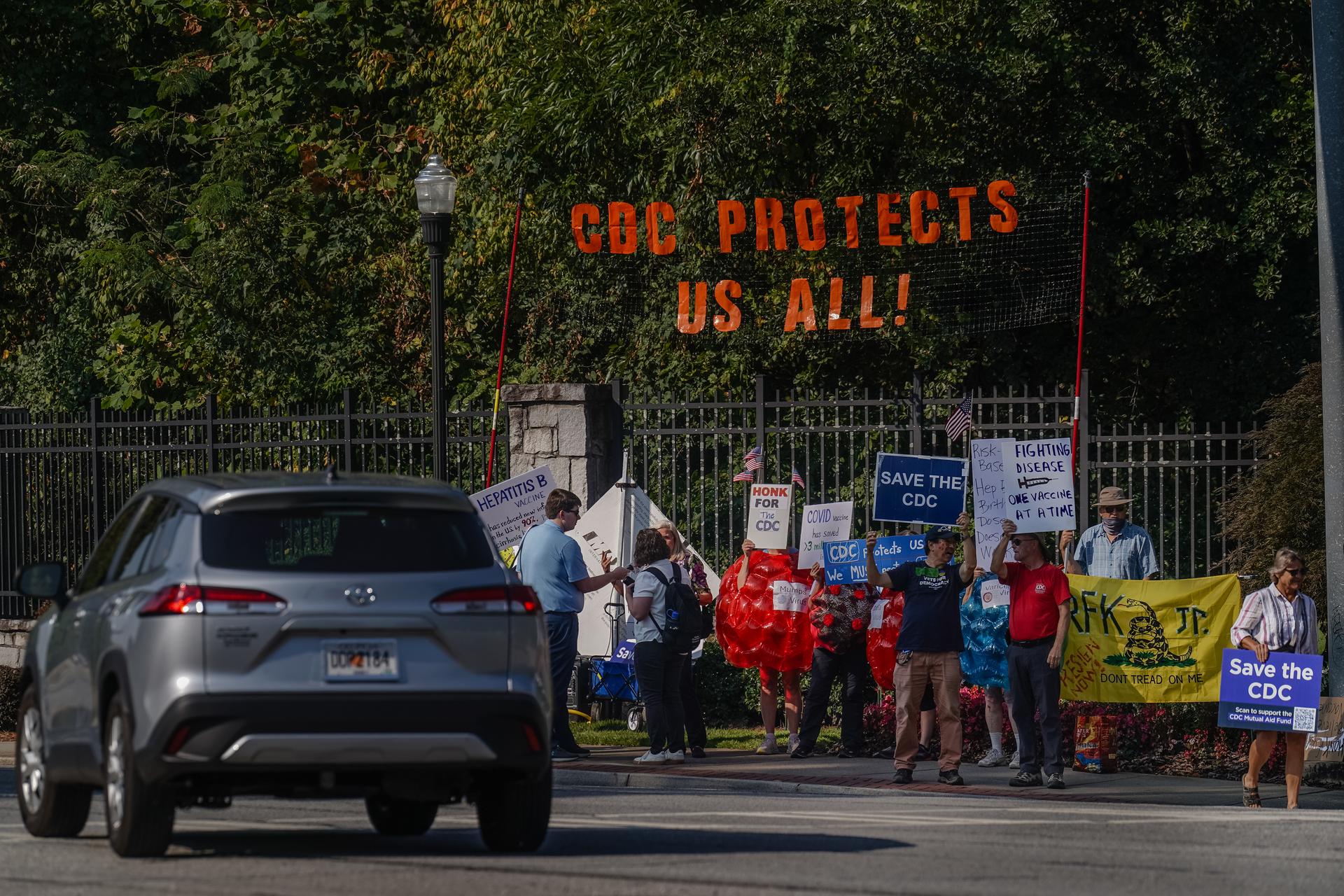
Dylan Scott here. It's Thursday. Last Friday, more than 1,000 Centers for Disease Control and Prevention workers were laid off by the Trump administration, which blamed the government shutdown. While some of them were quickly rehired, it's still a net loss of hundreds of federal public health staffers.
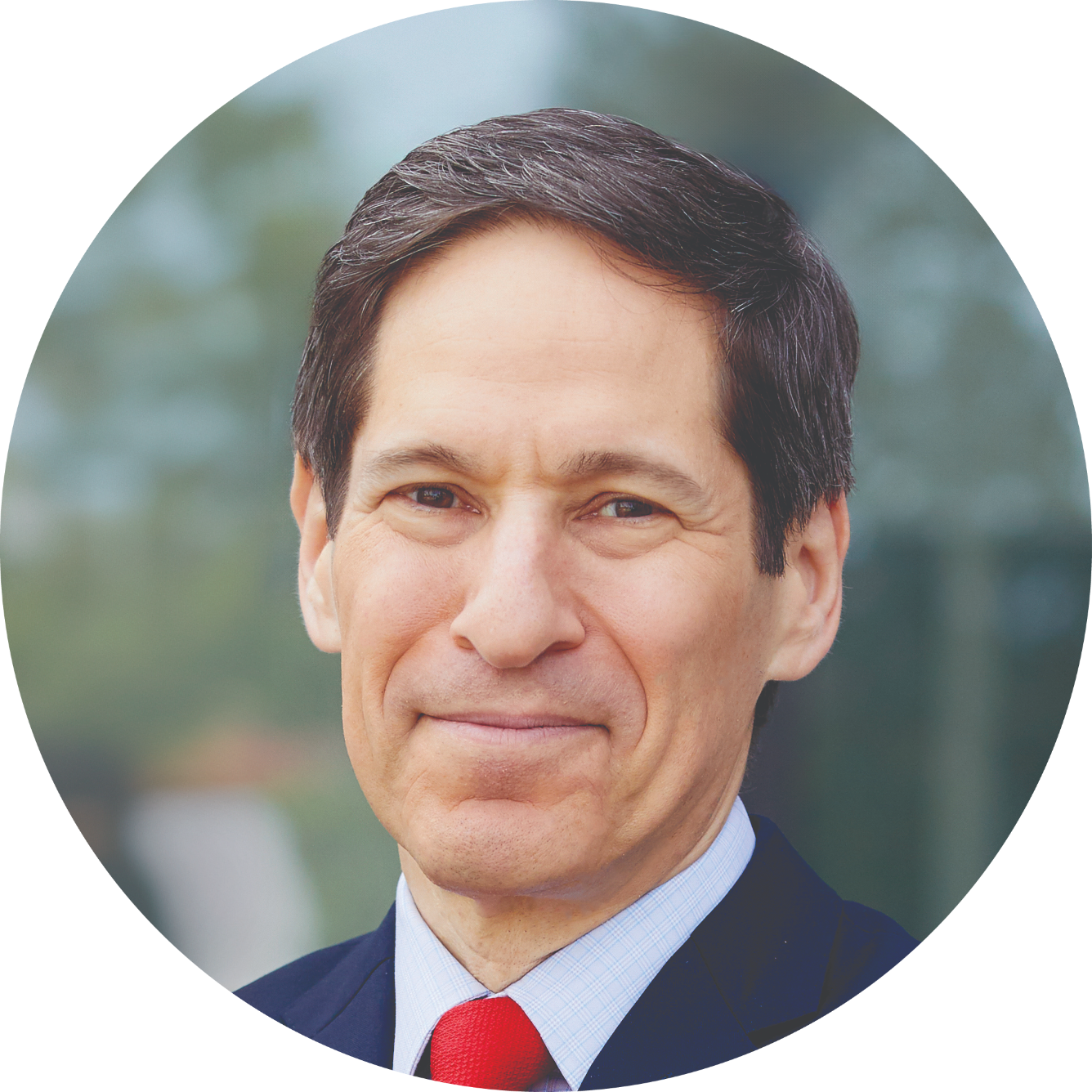
To get a better sense of where the agency stands after this brutal year, I spoke Wednesday with Dr. Tom Frieden, who was CDC director under President Barack Obama. Our conversation is today's main story. |
|
|
Can the CDC ever come back from this? |
|
|
| Dylan Scott
The CDC is one-third the size it was at the beginning of the year. Which specific functions do you worry about the most? What hasn't gotten enough attention? |
|
|
| Dr. Tom Frieden
You start with: We're losing our basic ability to know what's happening. That's really dangerous. Flying blind is a really bad strategy, whether you're piloting an airplane or trying to avoid cancer and infectious diseases. Our systems track what's happening and see whether the programs that we want to implement to save lives are actually working or not, so that we can then either fix them or continue them.
Then, there are the specific actions that are being taken that are very damaging, such as dismantling the Office of Smoking and Health, which has led US efforts that have dramatically reduced smoking in the US and continue to track what's happening in populations. The Food and Drug Administration tracks the product; the CDC tracks what happens in people and supports comprehensive action in communities, and quit lines, and hard-hitting ads. That's all gone.
So, although I think much of what is said is laudable, what is done is the opposite of what is said. |
|
|
| Dylan Scott
As a reporter who cites the CDC's survey data a lot, I'm concerned about the layoffs in that office. What could we lose or miss if that data isn't available or reliable? |
|
|
| Dr. Tom Frieden
This is a really complicated survey. It's really hard to do. I know that particularly well, because when I was New York City health commissioner, we did the first-ever community-specific health and nutrition examination surveys.
It was massively difficult. It takes incredibly rigorous work to get comparable data, and a representative sample, and competent lab work. It's like building battleships, kind of. And once you stop building them, it's really hard to start again.
This is our most ground-level truth of what's really happening. These surveys tell you how we're really doing, and that may indicate what needs to be done differently. It's also the way we know what's happening with PFAS and how many people have exposure to these chemicals in our blood, and whether we'll be able to reduce that with actions that this administration says they want to take.
|
|
|
| Dr. Tom Frieden
What's the alternative? People have life-and-death decisions that still need to get made. You have a CDC that has been basically taken over by ideologues. This has never happened before. You have political appointees running the agency, setting policy on social media, making statements that show that they have very little understanding of or respect for basic scientific method, evidence, and facts. |
|
|
| Dylan Scott
A lot of people had already lost trust in the CDC. Now, more people are losing trust for very different reasons. How will the CDC ever regain trust — or is it becoming obsolete? |
|
|
|
| Dr. Tom Frieden
It starts with listening carefully to what people are hearing — what they believe — and addressing valid concerns because the Make America Healthy Again movement gains power by real concerns people have: What's in my food? What's in my water? Who is involved in making these recommendations? Those are perfectly valid questions.
Unfortunately, with what's being done is in the name of reducing conflict of interest, you're seeing a big increase in conflict of interest. That's really clear in the autism discussion. They want to make autism a compensable condition under the Vaccine Injury Compensation Fund. This is payday for trial lawyers while using the people who are dealing with autism and giving them false hope and false information about vaccines, which are repeatedly shown not to have been associated with autism.
I think also public health needs to have tangible wins, things that it does that people can see and understand that this made their life better. This made my life healthier, safer. Our kids are about seven times less likely to smoke than they were a generation ago. Even with vaping, tobacco use is dramatically lower than it was a generation ago. The average lead level a generation or two ago would today result in urgent investigation. These are invisible wins.
That's not to say that either those problems are adequately addressed or there aren't other serious problems. We haven't dealt effectively with obesity. We haven't dealt effectively with asthma. We haven't dealt effectively among adults with hypertension, cardiovascular disease. We've had 10 or 15 years of stalled progress. I think past progress shows both what's possible and what's needed. But any mandates or requirements also need to be kept to an absolute minimum.
I don't see public health becoming obsolete, because facts are stubborn things. Even if they're denied, and suppressed, and misused, and misquoted, and cherry-picked, facts are still facts. The plain truth is that most people want to be healthy and safe, and what's being done now is putting that very much at risk. |
|
|
|
The 1965 Voting Rights Act enfranchised millions of Black voters in the Jim Crow era. The Supreme Court may be about to decide it's no longer needed. |
|
|
I'm committed to recommending some kind of horror content in every edition of the newsletter that I edit during the month of October, so today, let me shout out the 1979 version of Dracula, starring the murderer's row of Frank Langella, Laurence Oliver, and Donald Pleasance. Langella is the most romantic Dracula ever to appear onscreen; the cinematography is beautiful; and John Williams scored the music, so you know it's good. The John Badham film has a poor reputation compared to the classic 1931 version, or even Francis Ford Coppola's 1992 adaptation — unfairly, in my opinion. Now streaming on Netflix.
And a bonus click in honor of D'Angelo, the R&B star who passed away too young from pancreatic cancer. My favorite song of his: |
|
|
Today’s newsletter was produced and edited by me, senior correspondent and inveterate night owl Dylan Scott. We will see you tomorrow. |
|
|
Are you enjoying the Today, Explained newsletter? Forward it to a friend; they can sign up here. And as always, we want to know what you think. Let us know by filling out this form or just replying to this email.
|
|
|
|