

On this page · 4 min read
We published 140 Mother’s Day emails on Email Love over the last few years. Most of them were what you’d expect – gift guides, percentage-off sales, last-call delivery reminders. A handful were doing something more interesting, and those are the ones worth studying as you plan your 2026 campaign.
Six plays stood out, starting with the one we counted the most variations on: the sensitivity opt-out.
1. The sensitivity opt-out – and the variations brands are putting on it
Fourteen brands in our library ran a sensitivity opt-out. The play itself isn’t new – Bloom & Wild pioneered it back in 2019, and it’s been spreading steadily since. What’s getting more interesting is the variations brands are putting on it.
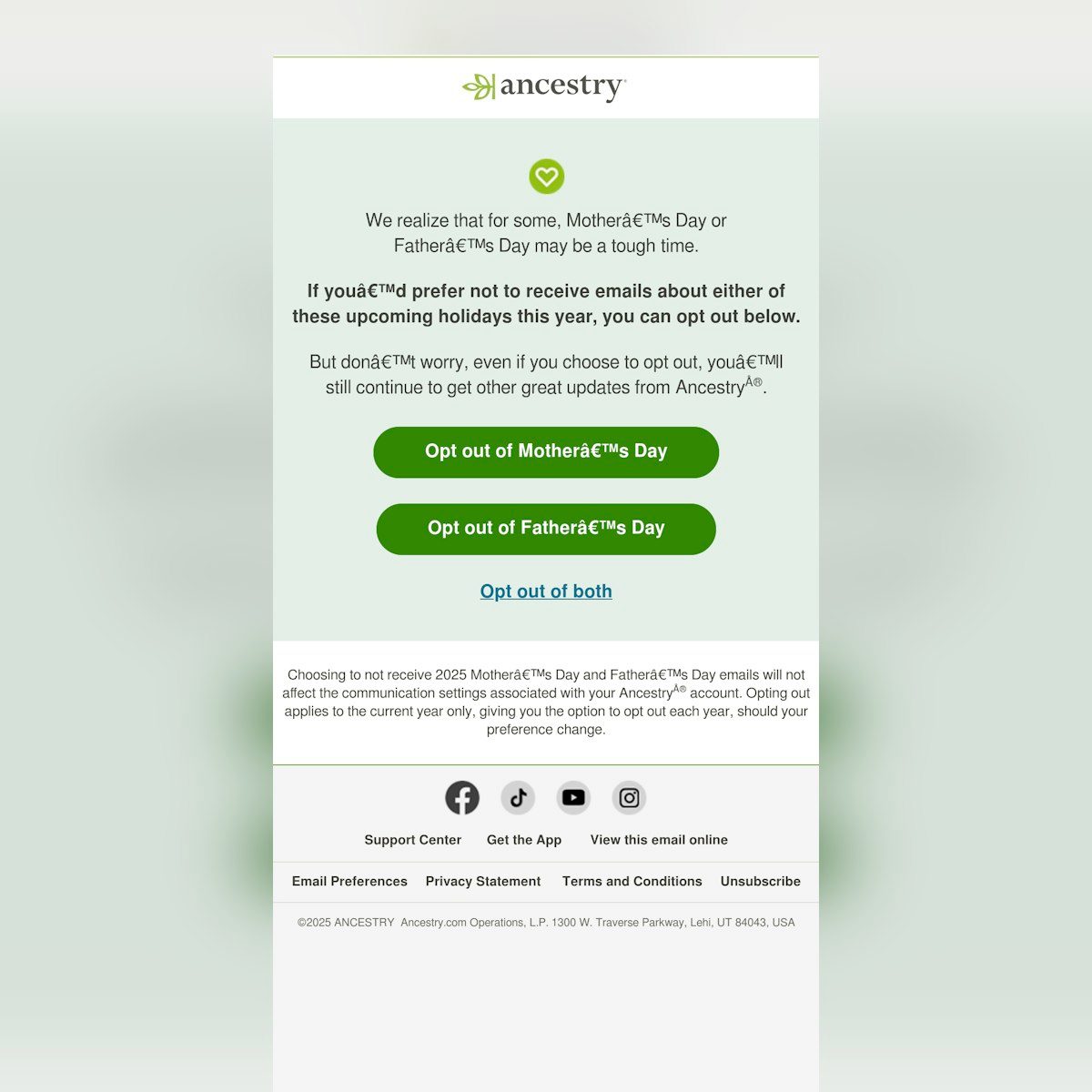
Ancestry – “Want to opt out of Mother’s Day or Father’s Day emails?” – This is the variation worth studying. Ancestry combined both holidays into a single opt-out send, as did Briggs & Riley (“Don’t Want Mother’s Day or Father’s Day Emails?”) and Momofuku (“Opting Out of Mother’s Day and Father’s Day Emails”). The combined approach signals that empathy isn’t a Mother’s Day-specific gesture for these brands, it’s a default stance. It also halves the number of emails you have to send and the number of times your subscribers have to make this choice.
111SKIN – “Prefer not to hear from us on Mother’s Day?” – The textbook clean execution. Question framing, single-click opt-out, sent April 30, about ten days ahead of the holiday. If you’re running this for the first time, study this one – it’s the most direct, unembellished version of the play.
Other brands running their own version in our library: M&M’S, ButcherBox, Vital Proteins, Vena CBD, Bala, Draper James, Peach & Lily, Simple Modern, and Michael Kors.
Worth considering for 2026 if you haven’t run one yet.
2. The letter from the founder
Two brands in our library ran a founder-signed Mother’s Day email last year, with two different angles on the same play.
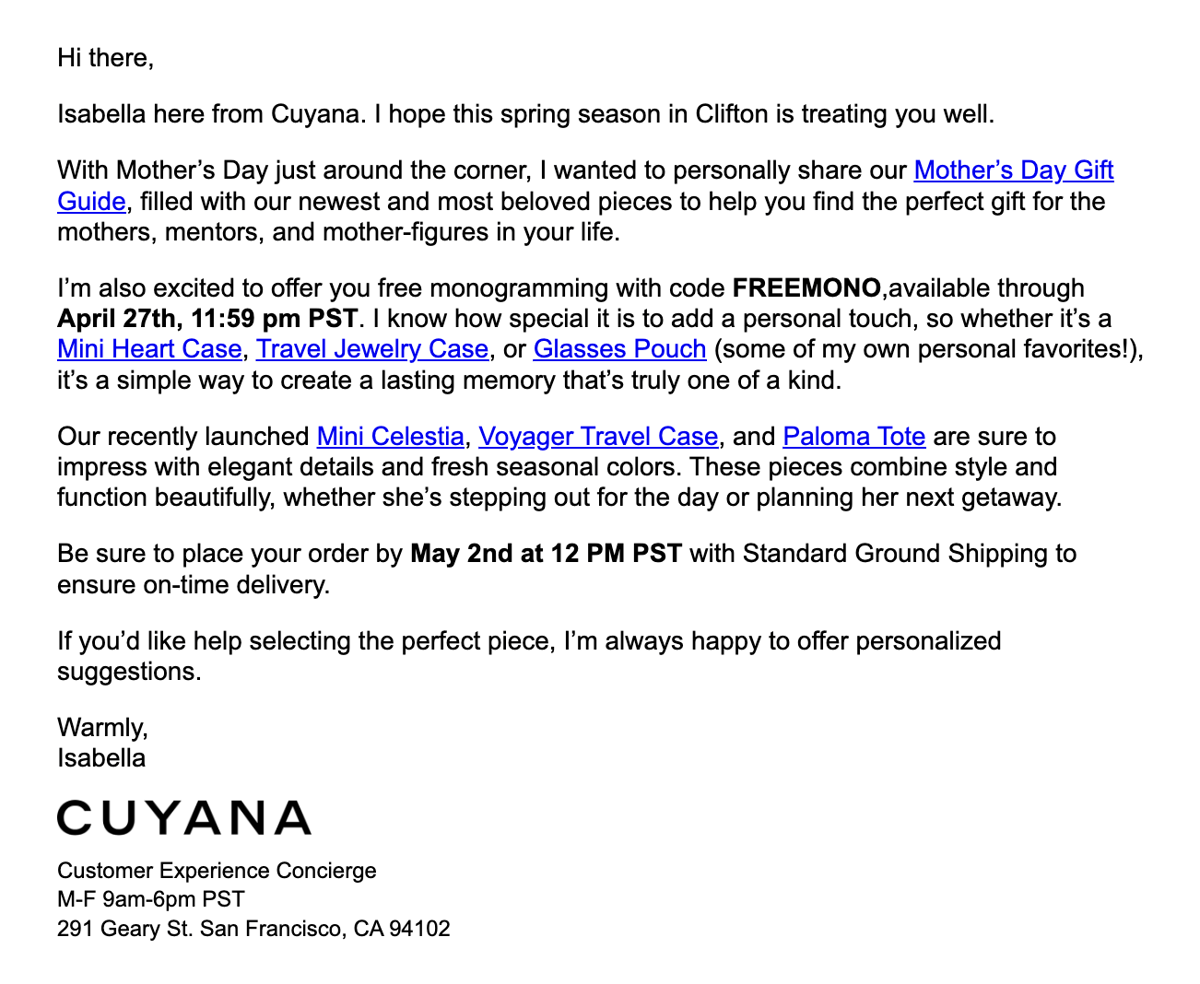
Cuyana – “Complimentary Monogramming for Mother’s Day” – This email came from Isabella, Cuyana’s actual founder, signed personally, offering free monogramming on every order for the holiday. A “letter from the founder” can feel performative on its own, but pair it with a substantive offer like free monogramming, and it becomes a Mother’s Day send that earns the inbox.
Jess from Italic – “Mother’s Day, from one mom to another” – Italic ran a peer-to-peer version of the same play. Jess, Italic’s founder, wrote the email mom-to-mom rather than founder-to-customer, and the subject line carries that framing on its own.
If you’re a founder-led brand, this is the kind of email worth borrowing – a real signature, a real point of view, no merchandising overlay.
3. Live commerce as the Mother’s Day moment
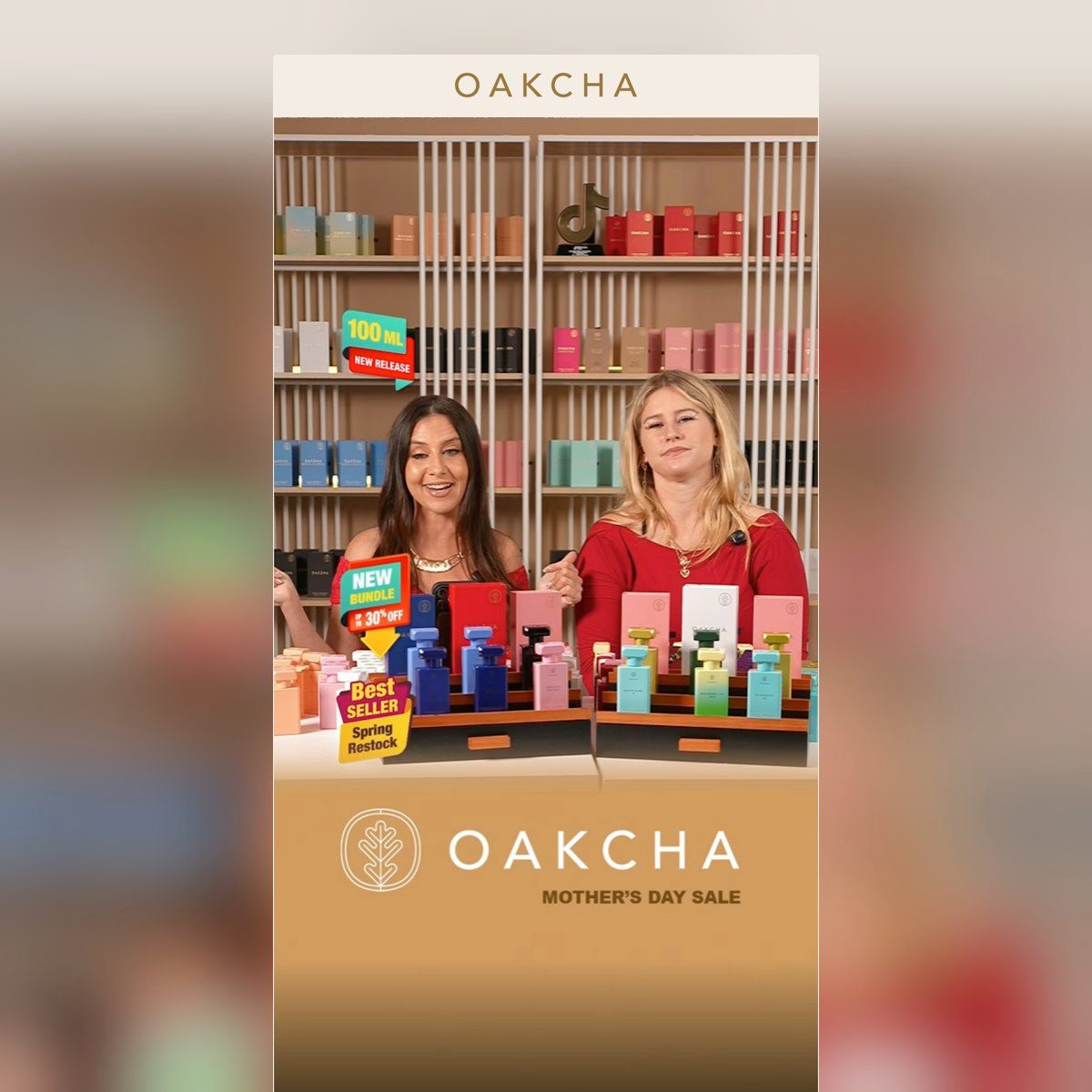
Oakcha – “Tune In · Mother’s Day Sale LIVE on TikTok” – The perfume brand used email to drive subscribers to a live TikTok shopping event. Email’s job here looks more like anchoring a multi-channel moment than driving a click-through. We’d expect to see more of this in 2026, especially from brands that already have a real social presence.
4. Experience gifts, not product gifts
The hospitality category has the experience play figured out, and a few non-restaurant brands are starting to run their own versions.
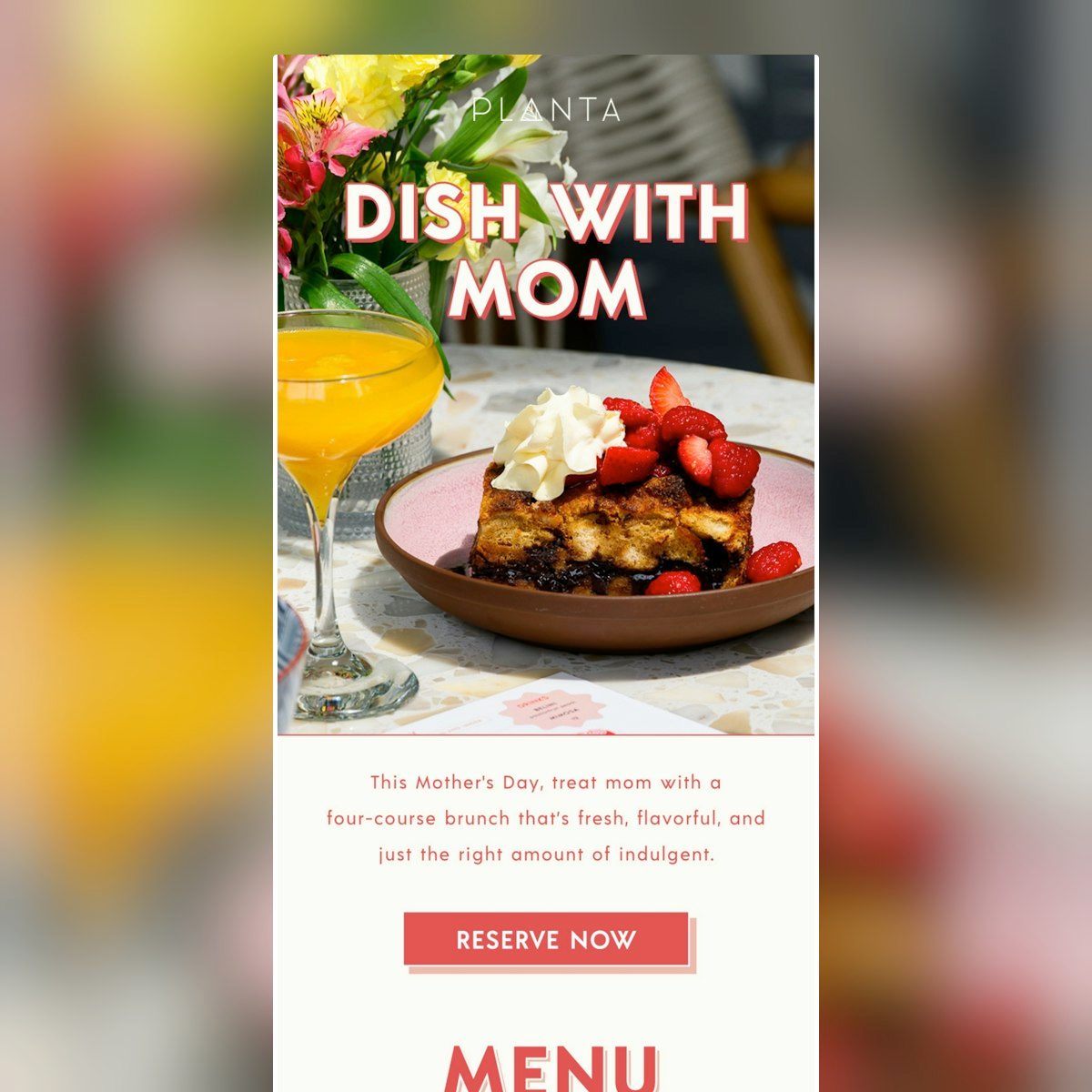
PLANTA – “Join us for Mother’s Day brunch” and CRAFT Beer Market – “Book Now: Mother’s Day Bottomless Brunch” – These emails are essentially booking funnels with brand polish, and they avoid the gift-guide grid entirely.
Red Sox Ticket Guide – “Celebrate Mother’s Day at Fenway!” – Sports tickets as a Mother’s Day experience is the version of the play we’d expect to see more of in 2026. Concert tickets, museum memberships, theme parks, race-track passes – anything ticketed works as a Mother’s Day pitch if your audience skews that way.
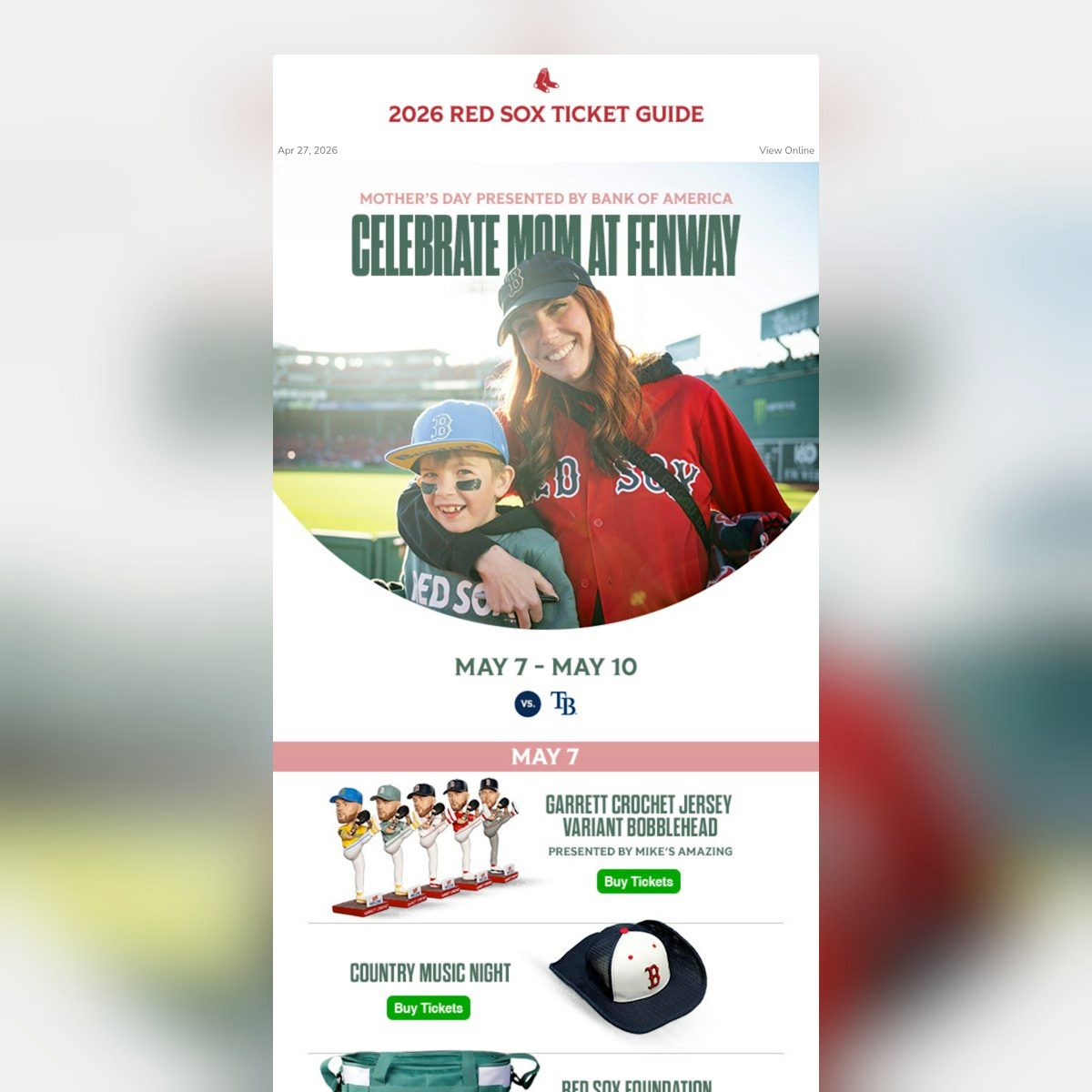
The lesson for non-experience brands: this framing works for anything with a service component – class bookings, spa days, virtual events, founder Q&As. If your brand offers anything experiential, Mother’s Day is a natural day to pitch it.
5. The named curator pick
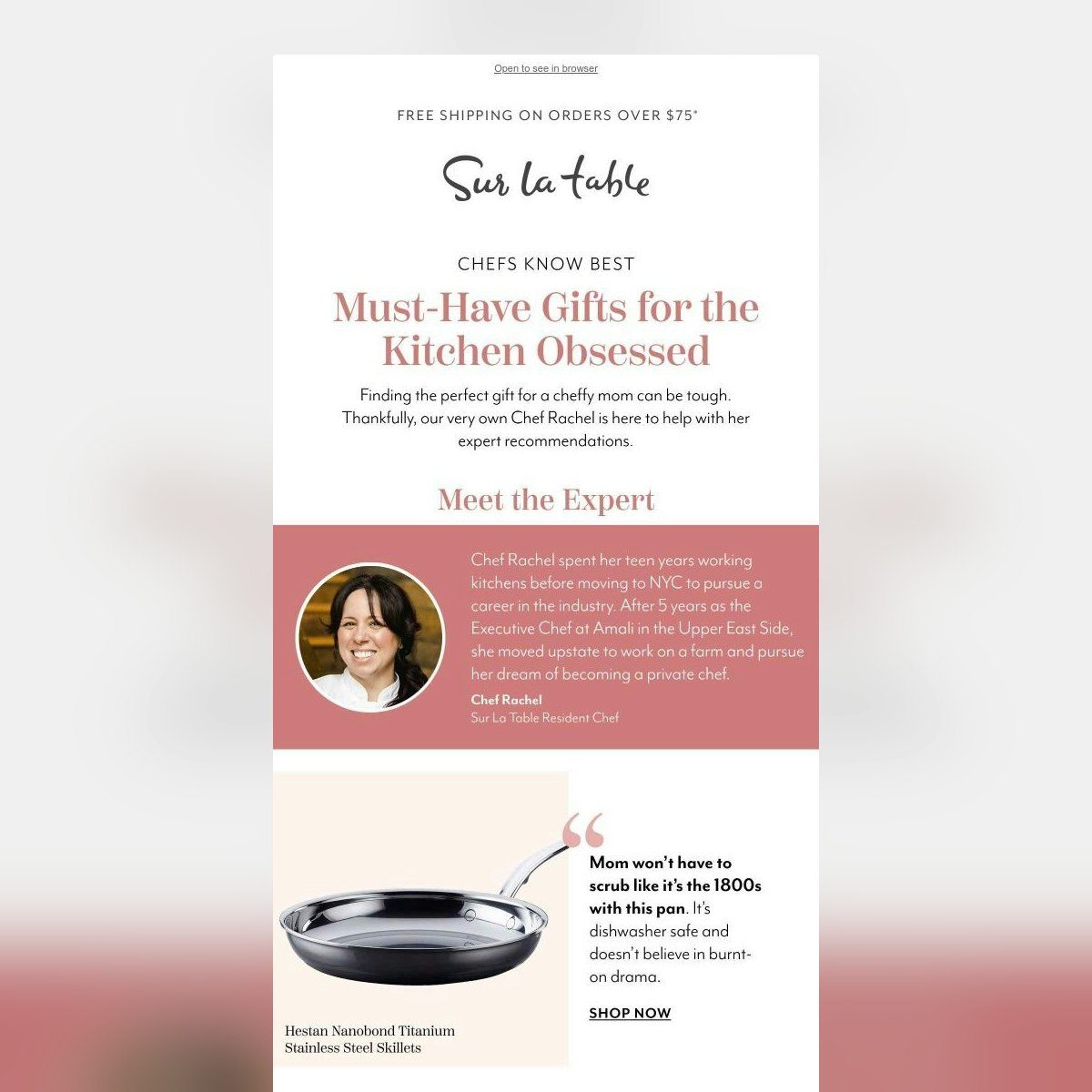
Sur La Table – “The Mother’s Day Edit: Chef-Approved Picks” and ShopBAZAAR – “Shop Editor Leah Chernikoff’s Mother’s Day Picks” — Curated picks usually outperform the algorithmic product grid, but the move that elevates “staff picks” to editorial weight is naming the curator. ShopBAZAAR put a real editor’s name in the subject line. Sur La Table credited “chefs” generically but the framing still carries because the audience trusts that authority. Worth lifting from your About page – your founder, your buyer, your in-house expert – and putting a name on the picks.
6. The minimalist subject line
Some brands skip the subject-line cleverness entirely and let the email itself do the work.
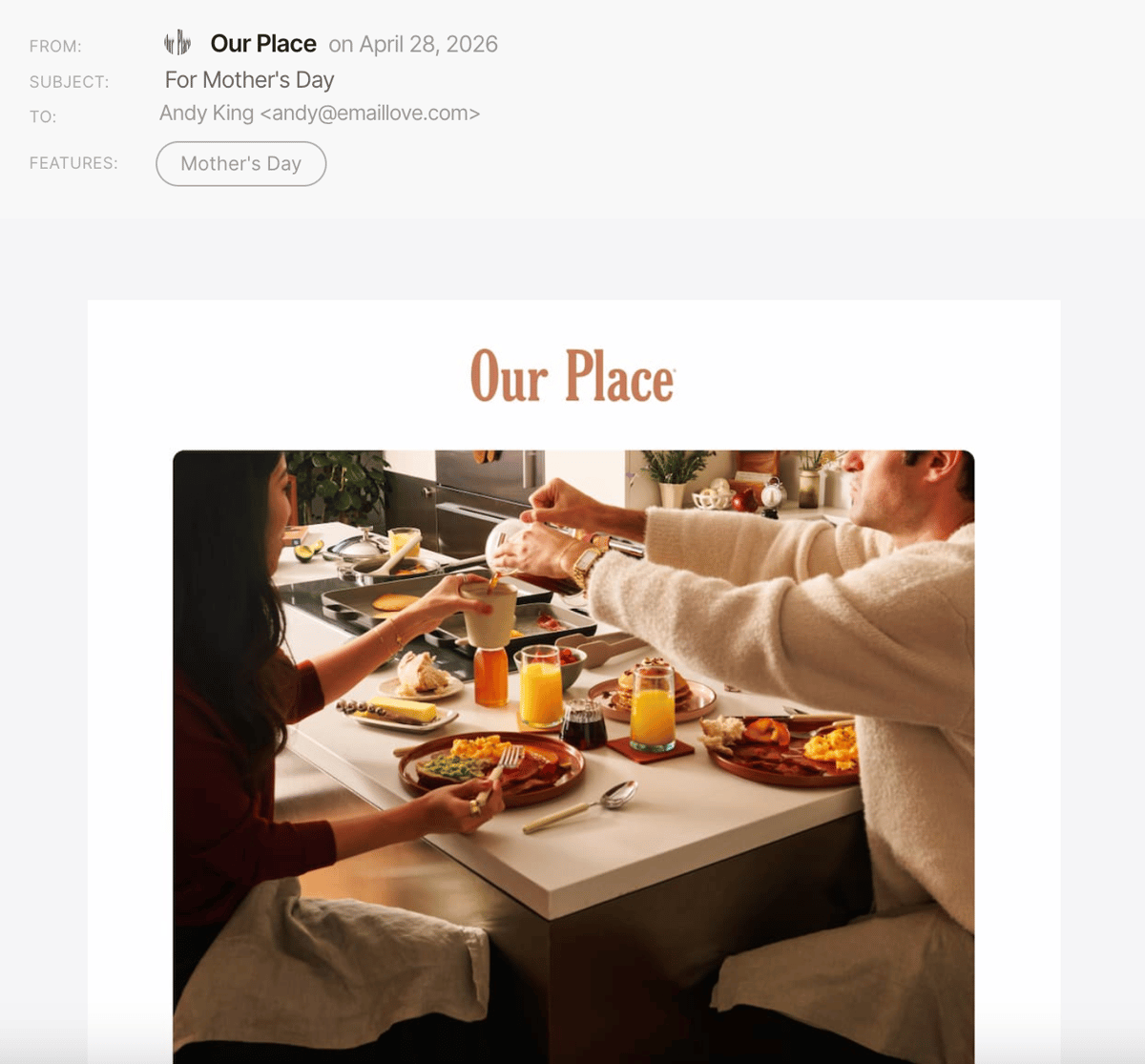
Our Place – “For Mother’s Day” is three words. Bottega Veneta sent the same campaign with a two-word subject line: “Mother’s Day.” Golden Goose ran the same approach. The minimalist play only works if your brand has the visual identity to carry the email itself, but when it does, the restraint signals premium more than any clever wordplay. Worth considering if your brand sits in a confident, design-led lane.
The takeaway
None of these plays is revolutionary on its own. Taken together, they point to a more considered way of approaching the holiday – one that’s worth borrowing into your 2026 mix, even if a percentage-off sale is still your main send.
If you’re shipping one Mother’s Day email this year, the question is which of these plays fits your brand. Click into any of them on Email Love to see the full design and content. The library has 140+ Mother’s Day emails total, plus thousands more across every other lifecycle moment.
See you next week and happy Mother’s Day!
Much love,
Andy

Andy has spent two decades building email programs for brands and agencies, and now co-runs Email Love: the inspiration gallery of 582,000+ emails and the Figma plugin that lets teams design, build, and export production-ready email without leaving their design file. He writes about email design systems, production workflow, and where the industry is heading.

Customer.io delivers more impact from every message–unifying data, messaging, and AI into one platform so every customer interaction gets smarter over time. We help teams build personalized campaigns across email, SMS, push, in-app, and webhooks, using their own first-party data to reach the right people with the right message at the right moment. AI is built into the platform to remove the grunt work, letting marketers focus on strategy, not setup. Over 9,000 brands trust us to power their messaging.
 Oct 20, 2026 · 8 min read
Salesforce Is Buying Braze. It Got Me Thinking About ESP Migrations.
Read article →
Oct 20, 2026 · 8 min read
Salesforce Is Buying Braze. It Got Me Thinking About ESP Migrations.
Read article →
 Oct 14, 2026 · 11 min read
10 MCP servers for marketers, and how I use them
Read article →
Oct 14, 2026 · 11 min read
10 MCP servers for marketers, and how I use them
Read article →
 Oct 1, 2026 · 9 min read
10 Halloween emails from last year to inspire your campaigns
Read article →
Oct 1, 2026 · 9 min read
10 Halloween emails from last year to inspire your campaigns
Read article →

