
On this page · 10 min read
Have you ever sent an email and only heard crickets? I’ve been sending emails for a long time, and I can tell you that silence is deafening.
But a quiet send is not a wasted one. Picture dropping 1,000 flyers across your neighborhood and getting zero calls back, while ten of them quietly end up stuck to refrigerators, waiting for the right moment. One of those becomes a customer in March, and another gets handed to a neighbor in June.
Email works the same way. Once you really believe that, you stop running your program out of fear and start running it like the long game it is.
The 24-hour verdict is a lie
Most good email programs die from the same quiet habit. You hit send, watch the dashboard for a day, and decide right then whether the email worked. But is this the best way to judge a send?
We have nearly 20,000 people on our list, and after two years of weekly sends, I have stopped trusting what day one tells me.
But a quiet first day is not a dead email. Go into your ESP and sort your opens and clicks by date instead of by campaign, and you will see something most marketers never stop to notice. People are opening and clicking emails weeks and even months after they went out. An idea sits in someone’s inbox until a random Tuesday when it suddenly matters, and they go back and find it. We see it in our own reporting all the time.
Why does that happen? Because a useful email does not get deleted. Instead, it gets:
- Saved or starred for “later,” and later finally arrives.
- Searched for when the problem it solves shows up. Nobody cares about your dark mode guide until their dark mode is broken.
- Forwarded to a teammate who just ran into the same thing.
- Resurfaced by the inbox itself when someone digs back through old mail.
So a send is not a fireworks show that lives and dies in one night. It is a seed. You put 20,000 of them in the ground, and most stay dormant, but some sprout weeks later, when the timing finally lines up with what that person needs.
This has a practical consequence. If your best emails keep getting found, give them somewhere to be found. Every evergreen send should have a permanent “view in browser” link, and your strongest pieces deserve a home on your website too. An email that also lives as a blog post keeps earning in search long after the inbox goes quiet. One idea, two engines.
Lifecycle marketing is a garden. You judge a garden by the harvest, not by what comes up the first morning.
This isn’t just a newsletter thing
My example is a newsletter, but this is not a newsletter problem. The seed is the same in every vertical, only the soil changes.
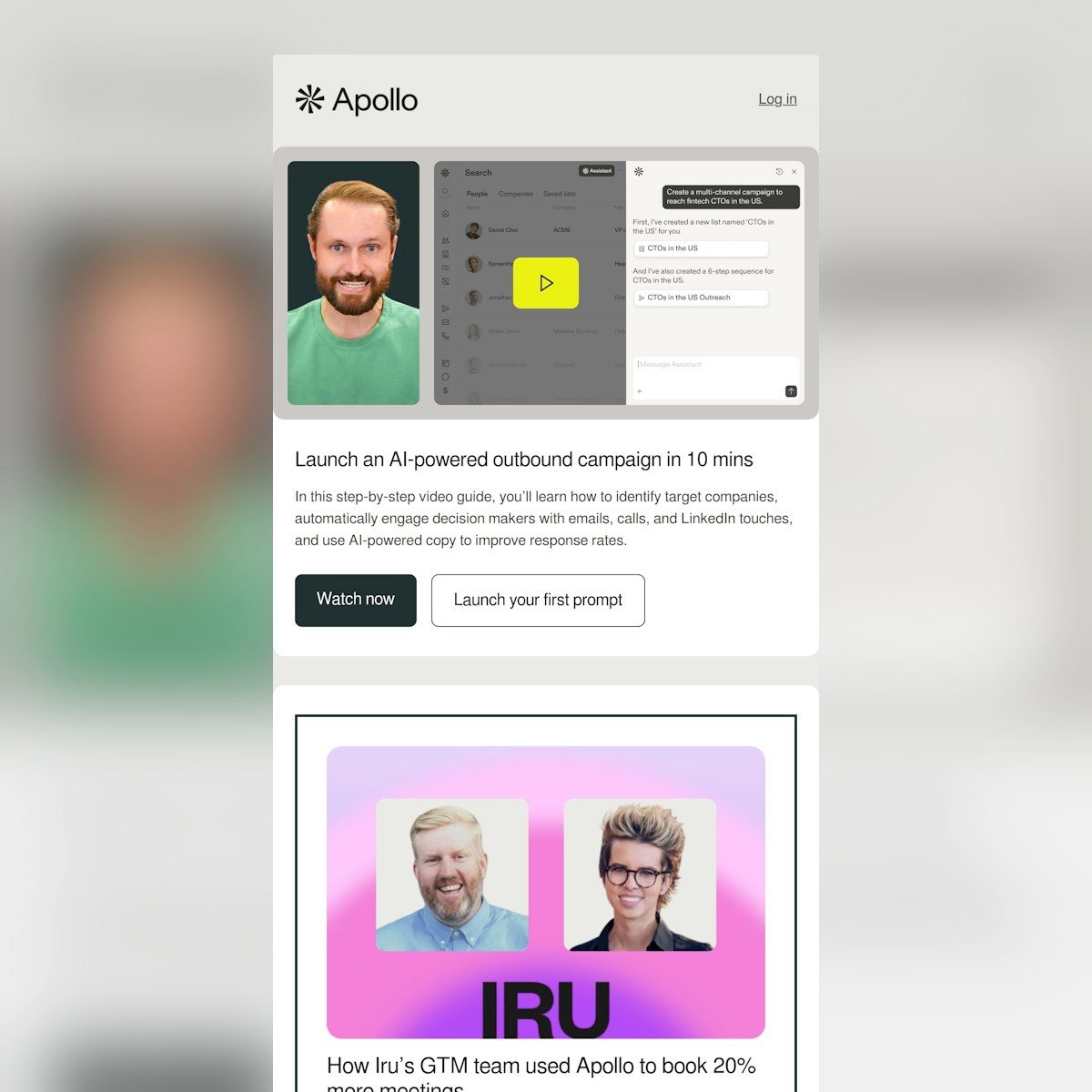
- B2B. Your sales cycle is long, and you do not control its clock. A prospect ignores your best explainer in March, then a budget opens or a pain finally bites in September, and they dig it back out of their inbox or forward it to the rest of the buying committee. The educational email you almost did not bother sending is the one that gets you shortlisted. Apollo’s “10-minute guide to launching an AI-powered outbound engine” is built to teach rather than sell, which is exactly why a prospect keeps it.
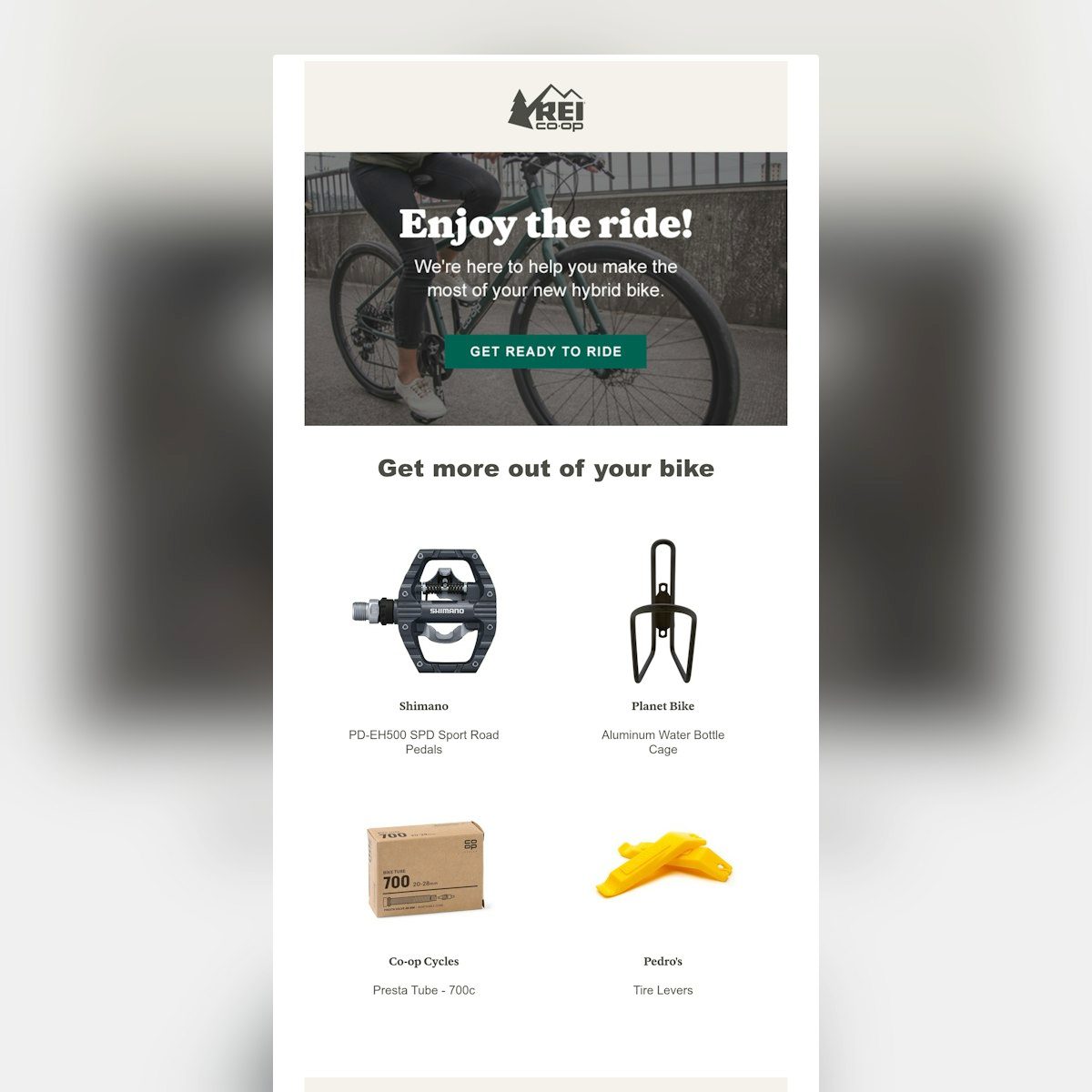
- Ecommerce and DTC. Think of a size guide, a care guide, or a gift guide. Nobody needs your “how to get the most out of it” email until the week they are finally ready, and then they go searching for it. A discount expires in a day, but useful product content keeps working for months. REI’s “Enjoy Your New Ride” is a post-purchase email that helps people use what they bought, the kind of thing a customer actually holds onto.
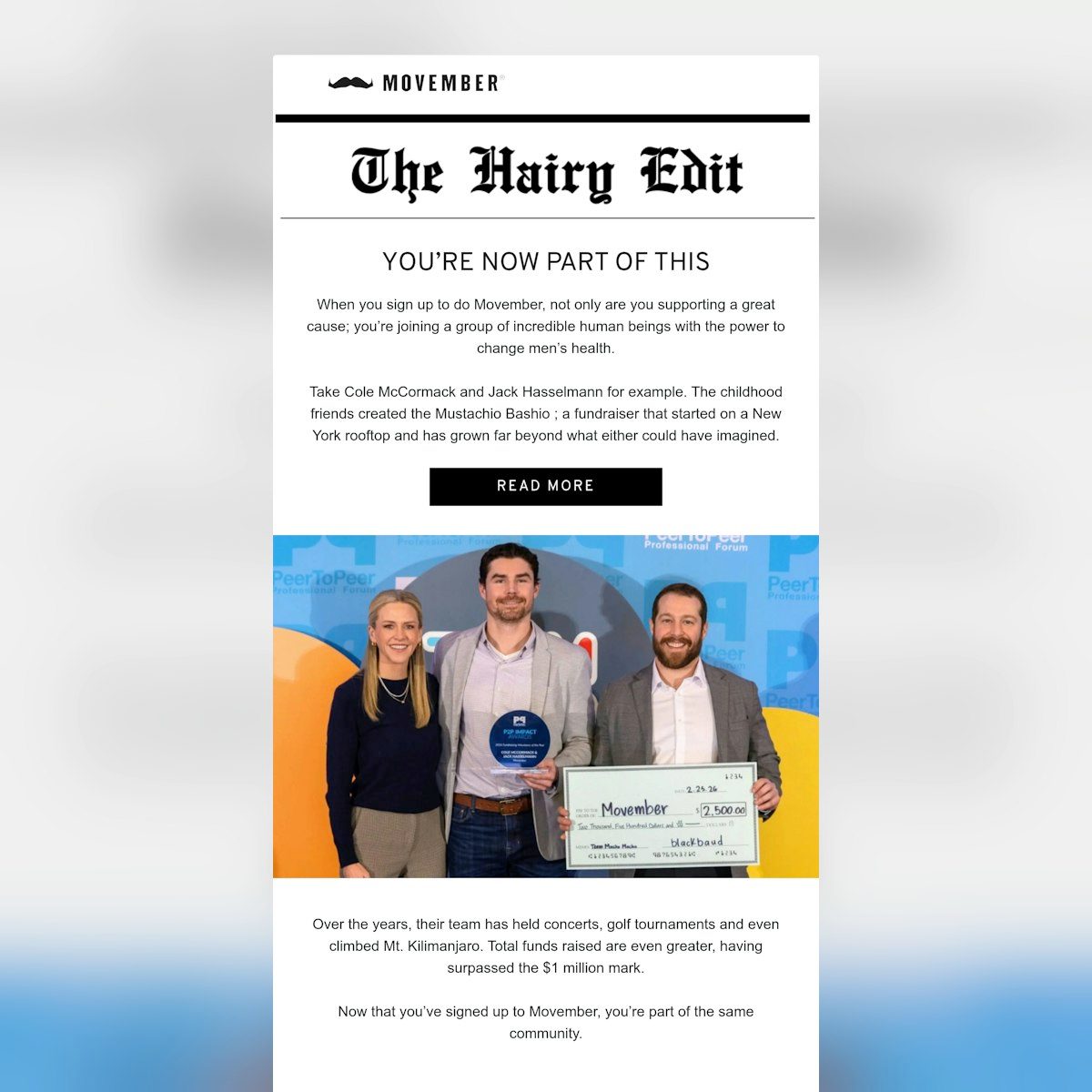
- Nonprofits. A donor does not give because you asked three more times. They give when a story moved them and the moment is right, often at year end, so the impact piece you sent in spring is the seed that blooms in December. Movember’s “Impact Isn’t a Solo Sport” opens with a rallying cry instead of a donation ask, and that is exactly why it sticks.
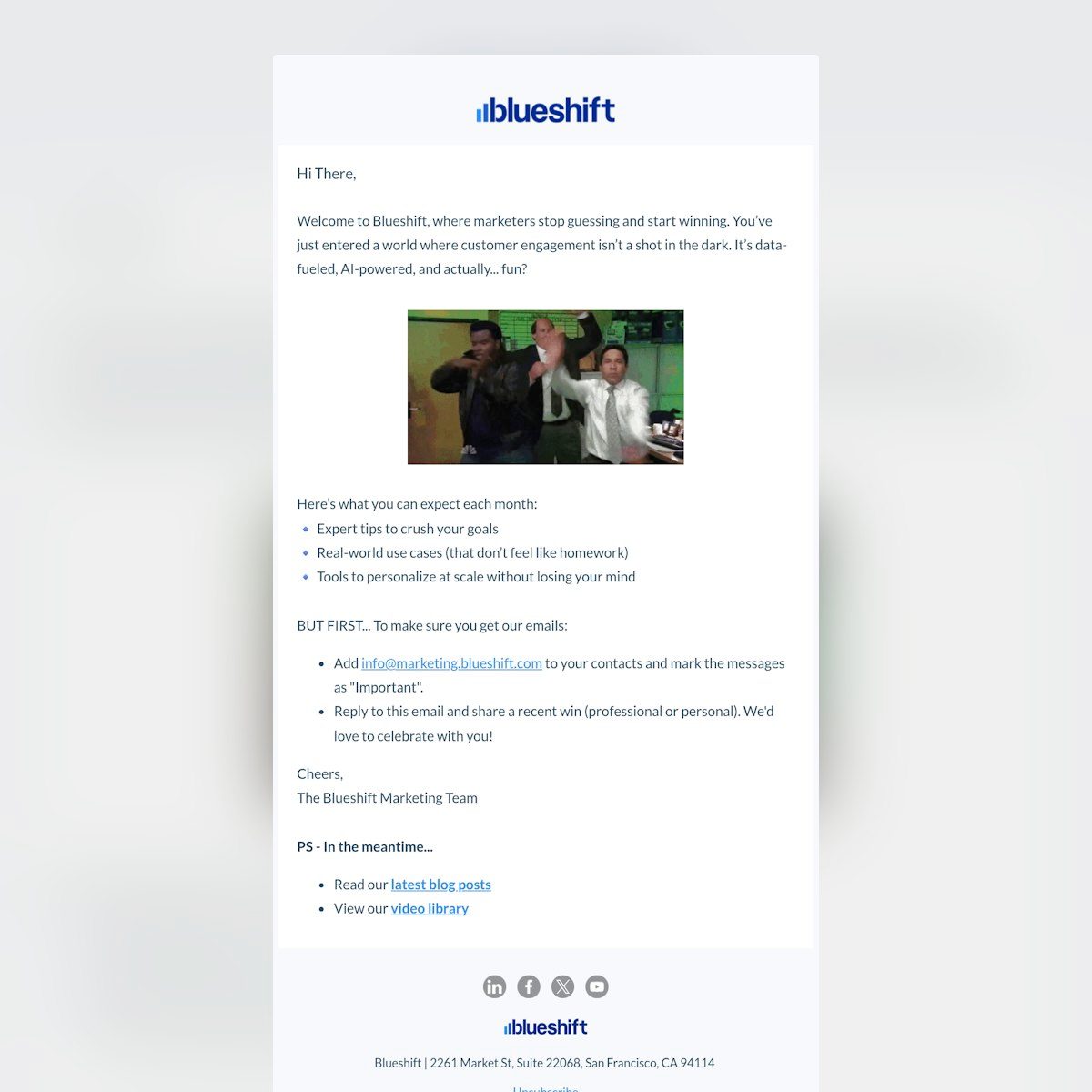
- SaaS. Your onboarding tip gets skipped on day one and rediscovered the week a user finally hits that feature and gets stuck. The best help content does not just drive activation, it prevents churn. A warm, useful first impression like Blueshift’s welcome email starts a relationship instead of a countdown.
The vertical changes the timeline and the payoff, but the principle does not. Useful content waits patiently in the inbox until your customer is ready for it.
But some seeds sprout faster, and bigger
Here is the part nobody tells you. Sometimes you don’t get crickets, and a send takes off the moment it lands.
After two years of a weekly newsletter, I can look at our numbers and see exactly which emails took off and which drifted past, and the gap is not random. Two things separate our winners from the rest.
The first is a subject line that gives people a reason to wonder. “Did we all just become developers?” pulled a 38% open rate, while “Email Marketing for Humans” pulled 30%. I won’t pretend that’s a clean experiment, since “developers” might simply be a more interesting hook than “humans,” and two subject lines prove nothing on their own. But the pattern holds across our sends: subjects that pose a question or hit a timely nerve tend to beat the ones that flatly describe what’s inside.
The second is content in our own voice, not a roundup. Our highest-clicking editions were never the curated link lists. They were the pieces where we actually said something, like a reader-mail answer about dark mode rendering that sent more than 3,000 people to a single post. It worked because it did everything a winner does at once: the subject was a real question a reader had asked, the body was a straight answer rather than a wall of links, there was one clear thing to click, and the topic does not expire, because dark mode rendering is still broken and probably always will be. The roundups keep the lights on, but it’s our own writing that people actually click.
A clever subject earns the open, and your best content earns the click. You need both.
Not every winner is worth replanting
This is the nuance that took me two years to see clearly.
Our single highest click rate ever came from a product launch. We had built something new, we said so, and people clicked like crazy. It was a great email, but I cannot send it again, because the news is no longer new. That was an event, and an event only tells you what your audience cares about, then it is gone.
The dark mode edition is the opposite. Dark mode was a headache in February, it is still a headache today, and it will be a headache next year, so that email can keep working for as long as the problem exists. That is the line that matters. Event hits are worth mining for what they reveal, and then letting go. Evergreen pieces, the how-tos and reader questions and answers to problems that don’t expire, are the seeds worth replanting.
How to find yours
You don’t need a data team for this. Open your ESP, pull your sends from the last 6 to 12 months, and sort by clicks rather than opens, since opens only tell you the subject worked while clicks tell you the content landed. Cross off anything tied to a date, a launch, or a one-time event. What’s left, ranked by click-to-open rate, is your shortlist.
The keepers tend to share the same traits. They solve a recurring problem, the kind that shows up for new people every month. They aren’t tied to a date. They answer something people would actually type into Google. And they stand on their own, without leaning on last week’s email or a promo that has ended. Pick your top three to five, because those are the ones you are going to keep working.
Put your winners back to work
Most of us treat a great email like that fireworks show. It goes off once, everyone looks up, and then it is gone. That is a waste of your best work, especially now that you know the list keeps growing and the content keeps getting found for months.
Three moves, and you can start this week.
1. Replant them in your welcome flow. Drop your evergreen winners into your onboarding series, so every new subscriber gets your greatest hits instead of whatever happened to go out the week they joined. You already run a welcome flow, most teams do, so this is simply choosing what goes in it on purpose. New people arrive every day, and now your best work greets them automatically.
2. Resend them in a year, lightly refreshed. Queue your top evergreen pieces to go out again in twelve months, updating the date, swapping a stale example, and freshening the subject line. Your newest subscribers have never seen it, and the ones who did won’t remember.
3. Repurpose them off the list. Your best email is also your best LinkedIn post, your best short video, and your best blog intro. If 3,000 people clicked it in the inbox, more will engage with it somewhere else, so one winning idea should show up in five places, not one.
“But won’t resending annoy people?” It is the first question every marketer asks, and the answer is no, as long as you are not lazy about it. Suppress anyone who opened it in the last few months, and remember that a big chunk of your list joined after it first went out and has never seen it. Change the subject line and freshen the open, and you are not spamming the same people with the same email, you are giving new people their first look at your best work.
Notice what this does to the metaphor. You are not only planting new seeds every week, you are taking the ones you already know will grow and planting them again, in better soil, in front of more people.
This is why content quality matters, in any vertical
Now the uncomfortable part. A seed only sprouts if it was worth keeping.
Nobody saves a “last chance, 20% off” email, nobody searches their inbox for your fourth follow-up, and nobody forwards a promo to a colleague. Those have a shelf life measured in hours. The long tail belongs entirely to content that earned its place in the inbox: the answer, the guide, the story, the idea worth a second look.
So when people say they want to stay top of mind, they usually reach for the wrong tools, like more sends, more promos, and more “just circling back.” That does not keep you top of mind, it trains people to tune you out, and eventually to unsubscribe.
Staying top of mind is not about frequency, it is about being worth remembering. You earn the next open by making the last one valuable, and when you give people genuine value, they come back on their own, months later, without being chased.
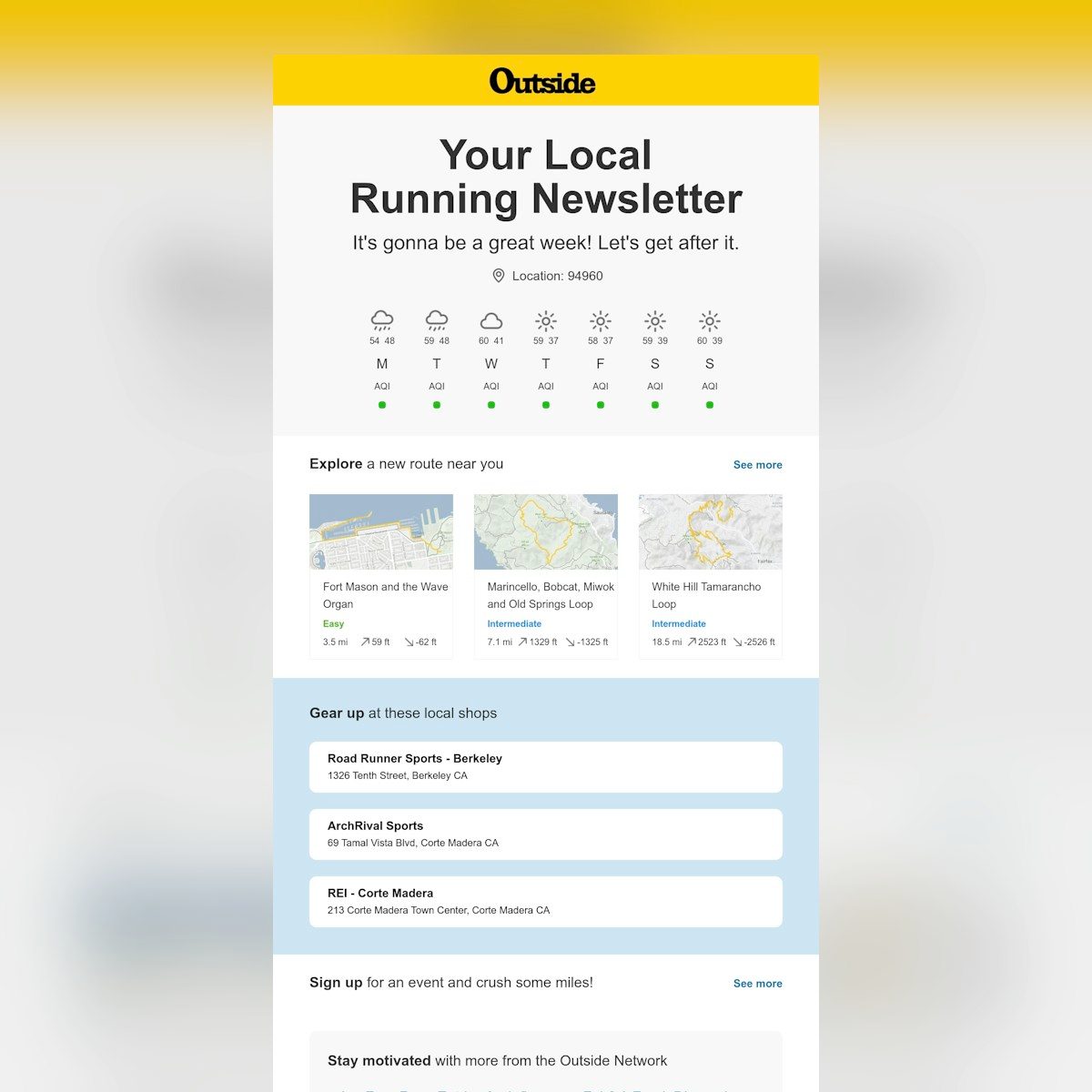
The brands that understand this send things worth keeping. Outside’s local running newsletter leads with a genuinely useful weather forecast and nearby routes instead of a sale, and ArchiPro reads more like a magazine than a marketing email. That is the bar: be useful enough to keep, and the long tail takes care of itself.
That is the real reason to invest in good email content, whatever you sell. Quality is not a nice-to-have layered on top of your email program, it is the thing that makes every other idea in this post possible. The welcome flow, the annual resend, the long tail, none of it works unless the email was worth opening in the first place.
The takeaway
The next time you hit send and hear nothing back, don’t read it as failure. Some of those seeds are in the ground waiting for their season, and if you check your ESP in a month, you will probably find a few of them quietly sprouting.
And the emails that did break through? Don’t let them die after one night. Sort them, find the evergreen ones, and put them back to work.
The flyer you forgot about is still on someone’s fridge. Your best email can be too.
This is the kind of thing we dig into every week in the Email Love newsletter. If you want more of it, come plant a seed with us. Subscribe →
Much love,
Andy

Andy has spent two decades building email programs for brands and agencies, and now co-runs Email Love: the inspiration gallery of 487,000+ emails and the Figma plugin that lets teams design, build, and export production-ready email without leaving their design file. He writes about email design systems, production workflow, and where the industry is heading.

Customer.io delivers more impact from every message–unifying data, messaging, and AI into one platform so every customer interaction gets smarter over time. We help teams build personalized campaigns across email, SMS, push, in-app, and webhooks, using their own first-party data to reach the right people with the right message at the right moment. AI is built into the platform to remove the grunt work, letting marketers focus on strategy, not setup. Over 9,000 brands trust us to power their messaging.