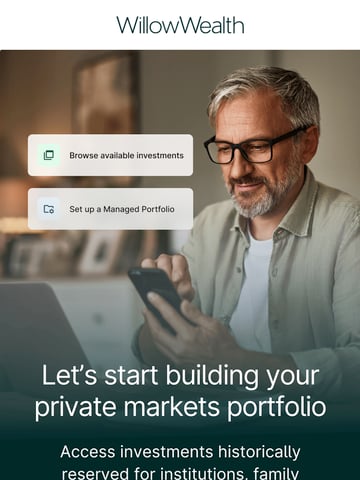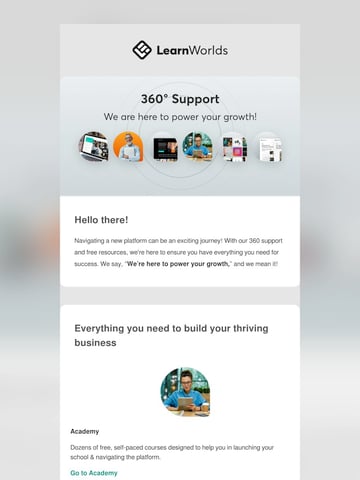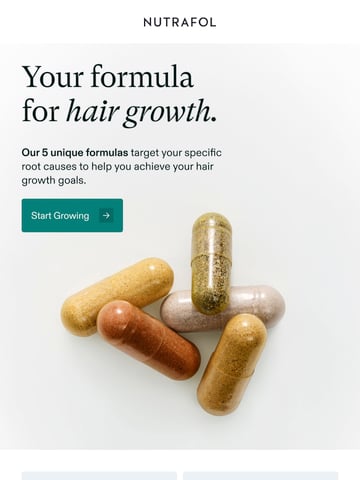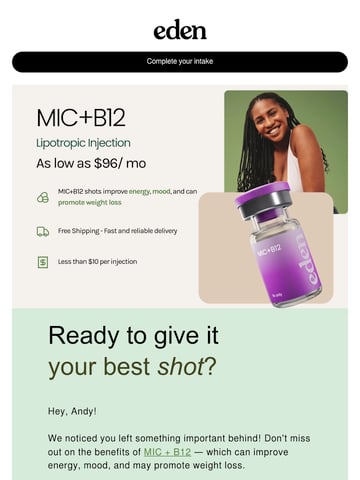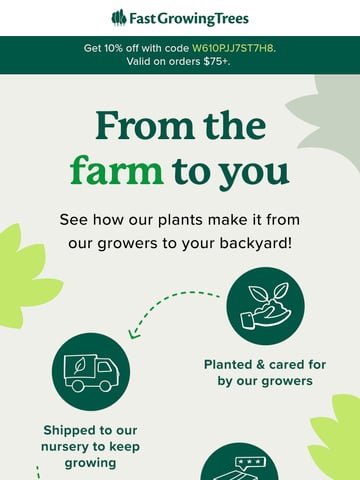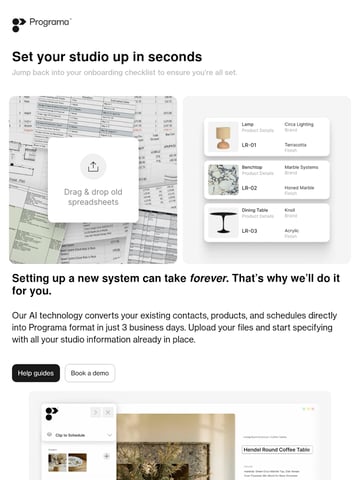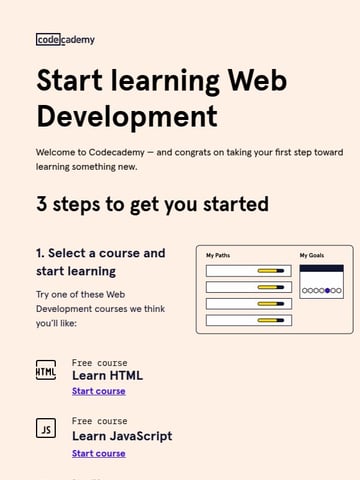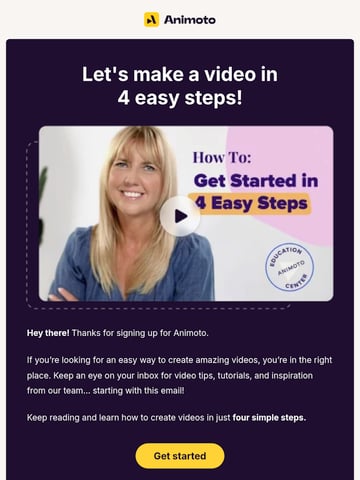
An onboarding email is part of the welcome sequence sent right after someone signs up, activates an account, or makes a first purchase. The best ones drive one clear next step (complete a profile, take a key action, explore a core feature) instead of dumping every feature at once. Send promptly while intent is high, and let each message build toward a single activation moment.

Onboarding emails turn signups into active users. They pick up where the welcome email ends and carry a new user to the first moment of real value, whether that is a completed profile, a first project, or a first order. This hub collects curated onboarding sends from brands like Dropbox, Vimeo, Navan, Waymo and Function Health, spanning software activation flows and the consumer equivalents.
The best onboarding sequences in the grid are built backward from one activation milestone. Each email teaches exactly one action, shows it concretely (the strongest sends use annotated screenshots or short GIFs of the actual flow), and measures itself against whether the user did the thing, not whether they opened the email. Generic feature tours perform noticeably worse than sends that react to what the user has and has not done yet.
Cadence is a design decision too. Common patterns here run an immediate first-step email, a day-two or day-three nudge, and value-reinforcement sends spread across the first two weeks, with behavior triggers overriding the calendar whenever the user acts. Study how the software brands compress their product into three teachable moments, then compare with the welcome hub for the send that precedes these, pull real onboarding subject lines, and see the broader SaaS collection.
Ranked by real reader views on Email Love over the last 90 days.
Pulled verbatim from sends in this collection. Every line links to the actual email it opened.
What the sends in this collection actually do, measured from our own archive.
Subject stats from 69 curated emails in this collection.
The welcome email is the immediate hello that confirms signup and sets expectations. Onboarding is the sequence after it that drives activation: teaching the key actions one at a time until the user reaches real value. Welcome is a moment; onboarding is a flow with a goal.
Enough to teach the two or three actions that predict retention, typically three to six sends over the first two weeks. Behavior beats the calendar: when a user completes the step an email teaches, the sequence should skip ahead rather than repeat itself.
One action per email: a clear headline naming the step, a concrete visual of the flow (annotated screenshot or short GIF), one or two lines on the payoff, and a single CTA deep-linking into the exact screen. Everything else is a distraction from the activation goal.
By activation, not opens. The metric that matters is whether recipients completed the step each email teaches and, downstream, whether onboarded users retain better. Opens and clicks are diagnostics; the sequence exists to move a product metric.
Designing your onboarding email?
Design it in Figma and export production-ready HTML straight to your ESP with the Email Love plugin. Build it in Figma →