
On this page · 4 min read
Last week, I asked you to hit reply and send me your toughest email marketing questions. And many of you did. Thank you!
I received a ton of great questions, and I’ll be working my way through them over the coming weeks. This week, I’m starting with three from Alberto, who runs a B2B business in the transportation niche. His business might be niche, but he’s dealing with a lot of the same email marketing challenges as many of you.
So let’s get into it.
Question 1: “How do I grow my subscriber list when traditional lead magnets don’t work in my industry?”
I’ll be honest, I think the market has fundamentally changed. Traditional marketing strategies just aren’t working like they used to.
Part of it is AI. More and more people are using AI to research products and services before they ever land on your website. By the time they find you, they’ve already done their homework. That old playbook of gated PDFs and generic checklists? It’s losing its pull.
We experienced this firsthand at Email Love. Last year, we made the decision to make Email Love completely free. Free analytics, free inspiration, free content. Everything a marketer needs to improve their email program. It’s probably why most of you are reading this right now.
And here’s what happened: our list started growing faster than it ever has. We now have over 12,000 registered users on the site and over 16,000 email subscribers. Yes, we gave up some revenue, but we see our audience and the community we are building as much more valuable.
The lesson isn’t “make everything free.” The lesson is this: what’s something genuinely unique and valuable that you can give your audience? Something they can’t easily get somewhere else? If it’s a PDF, that’s fine, but it needs to be genuinely useful for your target audience.
For Alberto, that might be a free compliance resource, a safety checklist that actually gets used, or a regular industry briefing that saves his audience time. For you, it’s whatever sits at the intersection of your expertise and your audience’s daily pain points.
Stop thinking about lead magnets. Start thinking about the ongoing value you can provide to your community.
Question 2: “Should I send plain text or designed emails? Isn’t plain text better for engagement?”
Maybe I’m biased. I run a site called Email Love that showcases beautifully designed emails. But I haven’t seen convincing evidence that you should switch to plain text only.
I think you should send both. Here’s how I think about it:
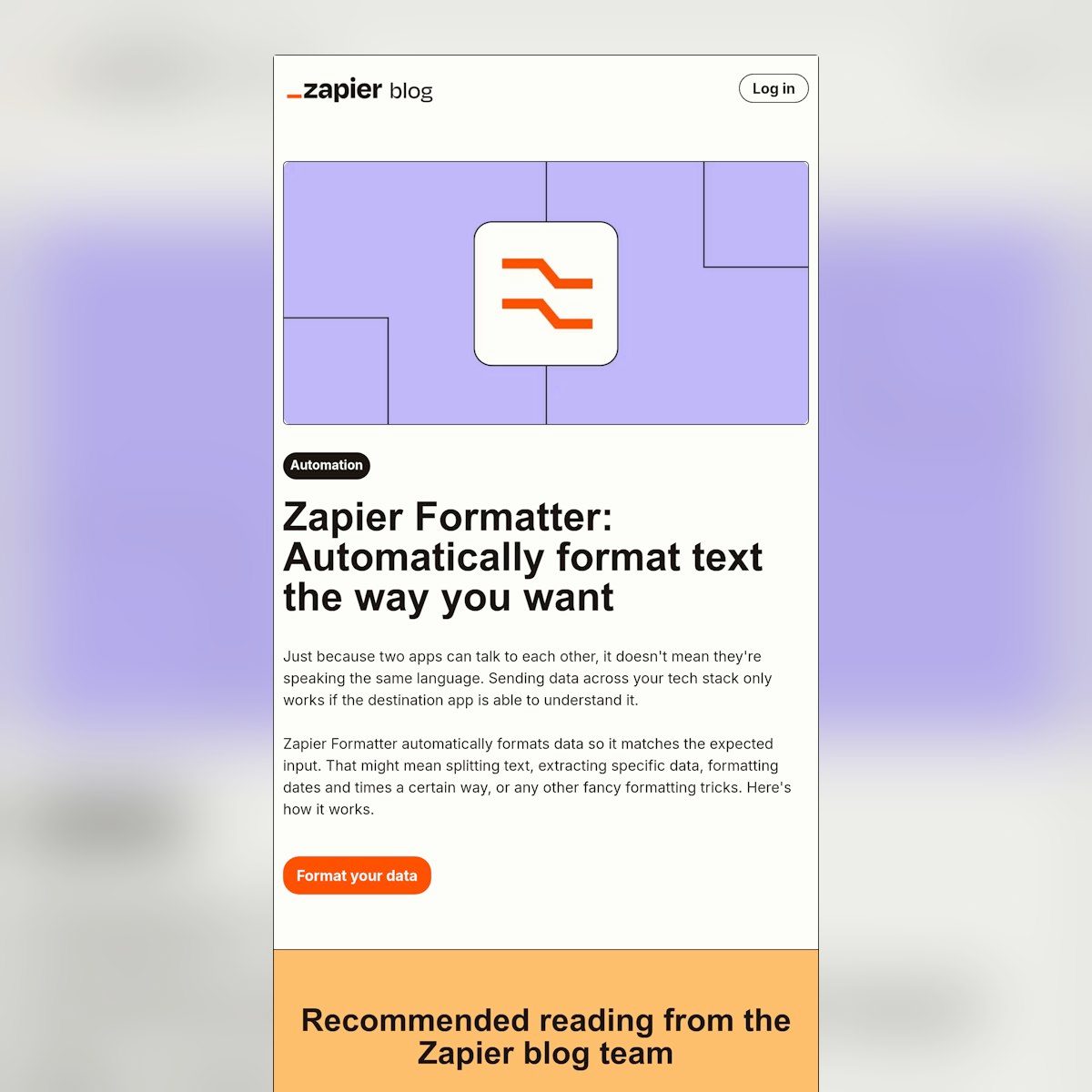
A well-designed newsletter? I personally love that. There’s something about opening an email that looks intentional and polished. Take a look at Deb’s newsletter from Zapier, ArchiPro, or Envato. All B2B, all visually appealing and engaging. Sure, these emails could also be plain text, but I personally prefer the designed look.
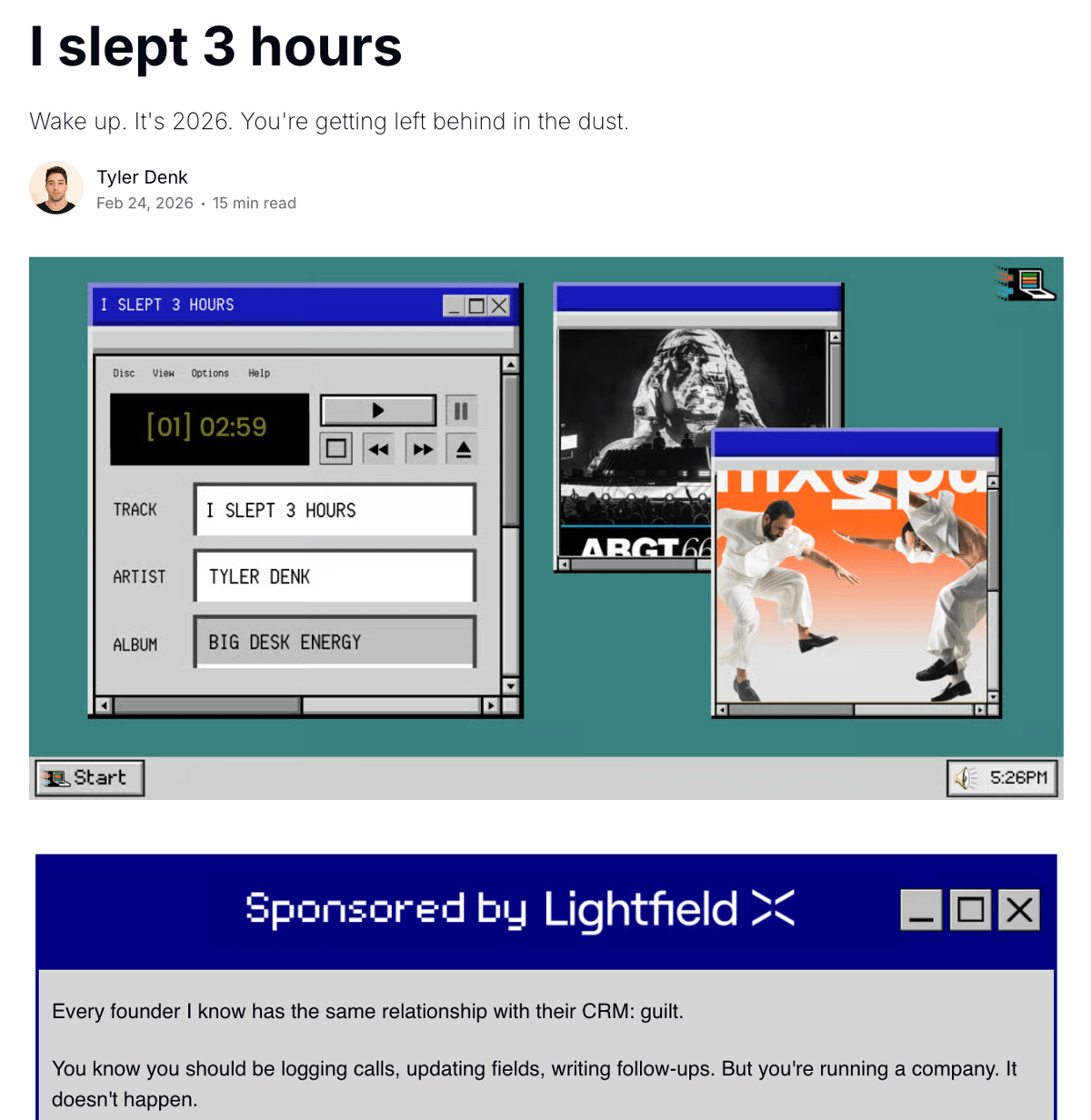
And then there’s Tyler from Beehiiv’s newsletter, which looks like a time warp back to 1995, and people can’t get enough of it. Design doesn’t have to mean corporate and boring. It just has to feel like you.
But a personalized, strategic message from a real person? That often works better as plain text. Think sales follow-ups, onboarding check-ins, renewal nudges. Those should feel like someone actually sat down and typed them out.
For B2B specifically, even your designed emails should lean heavily on HTML text with some images to elevate the design. It’s completely different from the image-heavy B2C emails you might see on our site. If you want to see this done well, check out the SaaS category. Mahy of those companies are using both designed and plain text emails really effectively.
The answer isn’t one or the other. It’s knowing which format serves which moment.
Question 3: “Do reply prompts actually help deliverability, or is it just an engagement tactic?”
Think about it this way. When was the last time you replied to a spam email?
Never. Right?
So when your subscribers reply to your emails, that’s one of the clearest signals a mailbox provider can get that you’re a legitimate sender. Replies tell Gmail, Outlook, and everyone else: “This person actually wants these emails.” From a purely technical standpoint, yes, encouraging replies helps your deliverability.
But that’s not the only reason to do it, and honestly, it shouldn’t even be the main reason.
Encouraging replies and actually responding to them is basically the equivalent of being a good neighbor. It’s just the right thing to do. Replies build goodwill. They start real conversations you’d otherwise never have. They surface problems you didn’t know existed and ideas you hadn’t considered. Alberto’s email to me is a perfect example. His questions turned into this entire newsletter.
For B2B, keep your reply prompts relevant and professional. Ask about challenges they’re facing, changes in their industry, and what topics they want you to cover. Don’t force it. Just make it clear that the door is open.
I’d recommend building a reply prompt into your welcome series, that’s when people are most engaged, and then weaving them in naturally, maybe once a month or once a quarter.
That’s it for this week. If you’ve got a question you want me to tackle in a future issue, about email strategy, design, deliverability, or anything in between, just email me [email protected].
No question is too basic. No niche is too weird.
Much love,
Andy

Andy has spent two decades building email programs for brands and agencies, and now co-runs Email Love: the inspiration gallery of 477,000+ emails and the Figma plugin that lets teams design, build, and export production-ready email without leaving their design file. He writes about email design systems, production workflow, and where the industry is heading.

Customer.io is an AI-powered customer engagement platform designed for organizations to create personalized customer journeys that engage, convert, and scale. Orchestrate messages across all channels, including email, in-app, SMS, push, and webhooks. Over 8,000+ companies, including Notion, LESMILLS+, and Angi, rely on Customer.io to power their messaging needs.