

On this page · 9 min read
Welcome back to Reader Mail, where we answer the real questions landing in our inbox from real email marketers. This week: a deceptively simple data question that’s actually a consent question in disguise.
This one came from Diana, an email manager at a national professional association. Here’s her question:
“We send emails to our members (and non-members) from a few different platforms, for a variety of reasons. One thing we’ve been debating internally: if a member gives us a new or alternate email address through another channel, say an event or an online learning app, should we change their membership email address? Or should we contact them and ask if they want it changed across all communications?
We think members believe all the emails from those various platforms are coming from the same place, and they kind of are. So if they give us a new address, should we assume they’re giving us a new address for all communications?”
Great question. And it’s one that almost every association, non-profit, and multi-product SaaS company eventually trips over, because the moment you’re sending from more than one platform, you have to decide what a single email address actually means.
Here’s our short answer: don’t overwrite a subscriber’s primary address without asking. Capture the new one, sure. But treat it as an additional address, not an automatic replacement, and confirm intent before you change their system of record.
Let us explain why, starting with the most useful exercise in all of email marketing.
Put yourself in the member’s shoes
Forget the database for a second. Think about your own inbox. Or inboxes, plural, because you almost certainly have more than one.
Most of us run at least two: a work email and a personal email. Plenty of people run three or four. And here’s the part that matters: we sort our lives across those addresses on purpose.
Work stuff goes to the work address. Receipts, newsletters, and the things we actually want to read on a Sunday morning go to the personal one. Maybe there’s a third address that exists purely to catch the noise, the one we hand over to ecommerce stores so the good inbox stays clean.
That separation isn’t an accident. It’s a system. And every member you have is running their own version of it.
So, picture what happens when you silently overwrite. A member registers for one of your continuing-education courses using their work email, because their employer is footing the bill and they want the completion certificate to land where they can forward it to their boss. Behind the scenes, your systems quietly decide that’s now their address for everything: renewal reminders, your monthly newsletter, event promos, the fundraising appeal.
You didn’t ask. You just decided that because they used an address once, for one purpose, they wanted it for all purposes.
From the member’s side, that feels like getting volunteered for something they never signed up for. The work they wanted in their work inbox is now mixed in with marketing they wanted somewhere else entirely. And the inbox they’d carefully kept clean just got a little less clean, by your hand, not theirs.
“It all comes from the same place” is true, and it’s a trap
Diana’s instinct is right on the facts: members probably do think of your emails as coming from one organization, even when five different platforms are doing the sending. That’s a credit to your brand: the experience feels unified.
But that perception is the trap. Just because a member sees you as one entity doesn’t mean they intended one address for all of it. The unified feeling is about your brand. The separate addresses are about their life. Those are two different things, and only one of them is yours to manage.
The member is the owner of their own contact preferences. You’re the steward. When you overwrite without asking, you quietly swap those roles and start making a personal organizational decision on their behalf. Most of the time, they’ll never notice. But the times they do notice are exactly the times that hurt: the members-only emails they’d always read at home suddenly stop reaching their personal inbox, so they assume their membership lapsed. The login link routed to a work address they lost access to when they changed jobs. The “wait, why is this going to my work email?” reply that chips away at a little trust.
There’s a practical cost too, beyond the relationship. Quietly switching someone’s address of record can:
- Break your engagement and deliverability history. That old address may have years of opens and clicks behind it, signals that mailbox providers like Gmail and Yahoo use to decide whether you reach the inbox at all. Swap to a cold address and you’re starting that reputation from scratch.
- Send to an address that was never meant for marketing. A work address handed over for a CE certificate isn’t a marketing opt-in. In some cases it’s a corporate address governed by IT policies you don’t even know about.
- Scramble their preferences. If your preference data is tied to the old record and you move them to a new one, you risk re-subscribing someone to things they’d already opted out of.
- Run against the spirit of consent rules. Frameworks like GDPR and Canada’s CASL are built around the idea that people have a right to know how their data is being used and to control it. Silently repurposing an address for a channel or subscription they didn’t sign up for cuts against that, even when no single law spells out this exact scenario.
First, is it even the same person?
Sometimes you can’t tell, and that changes everything.
If the new address showed up in an identified context, you’re in good shape. Maybe the member was logged into your learning portal when they used it, or their event registration was tied to their membership ID. In those cases the new address arrives already attached to a known person, and you can confidently add it to their record.
The cold case is harder. A registration comes in with nothing but a name and a new email, and no shared identifier linking it back to anyone. Matching on name alone is risky. There are two John Smiths in any large membership, and nothing is worse than merging two real people into a single record.
So when you can’t link the addresses with confidence, don’t guess. Let the new address stand on its own and flag it for a human to review. A duplicate you clean up later beats a bad merge you might never catch.
This is also why overwriting is the wrong default. It isn’t only a consent problem, it’s an identity problem. A lot of the time, you can’t actually be sure the new address belongs to the same person, and silently overwriting bakes that guess straight into your system of record.
What to do instead
Once you’re confident the new address really does belong to the member, you don’t have to choose between “ignore it” and “overwrite everything.” There’s a much better middle path: treat new addresses as alternates, and let the member promote one to primary.
Here’s what that looks like in practice.
Capture it, don’t crown it. When a member uses a new address at an event or in your learning app, store it as an additional known address on their record. Now you’re not losing useful data. You just aren’t acting on it unilaterally.
Confirm with a lightweight, one-click prompt. The next time you’re already in touch, ask. Something as simple as:
“We noticed you recently used [[email protected]]. Want to make this your primary address for all [Association] communications, or keep it just for [event/course updates]?”
One quick tap. Thirty seconds of their time. And now whatever happens next is their decision, which is exactly where it should sit.
Give them a real preference center. This is the long-term fix. A good preference center lets members manage which address receives which type of communication: renewals here, the newsletter there, event updates wherever they like. For an organization sending from multiple platforms about genuinely different things, this isn’t a nice-to-have. It’s the structure that makes the whole multi-address reality manageable instead of messy.
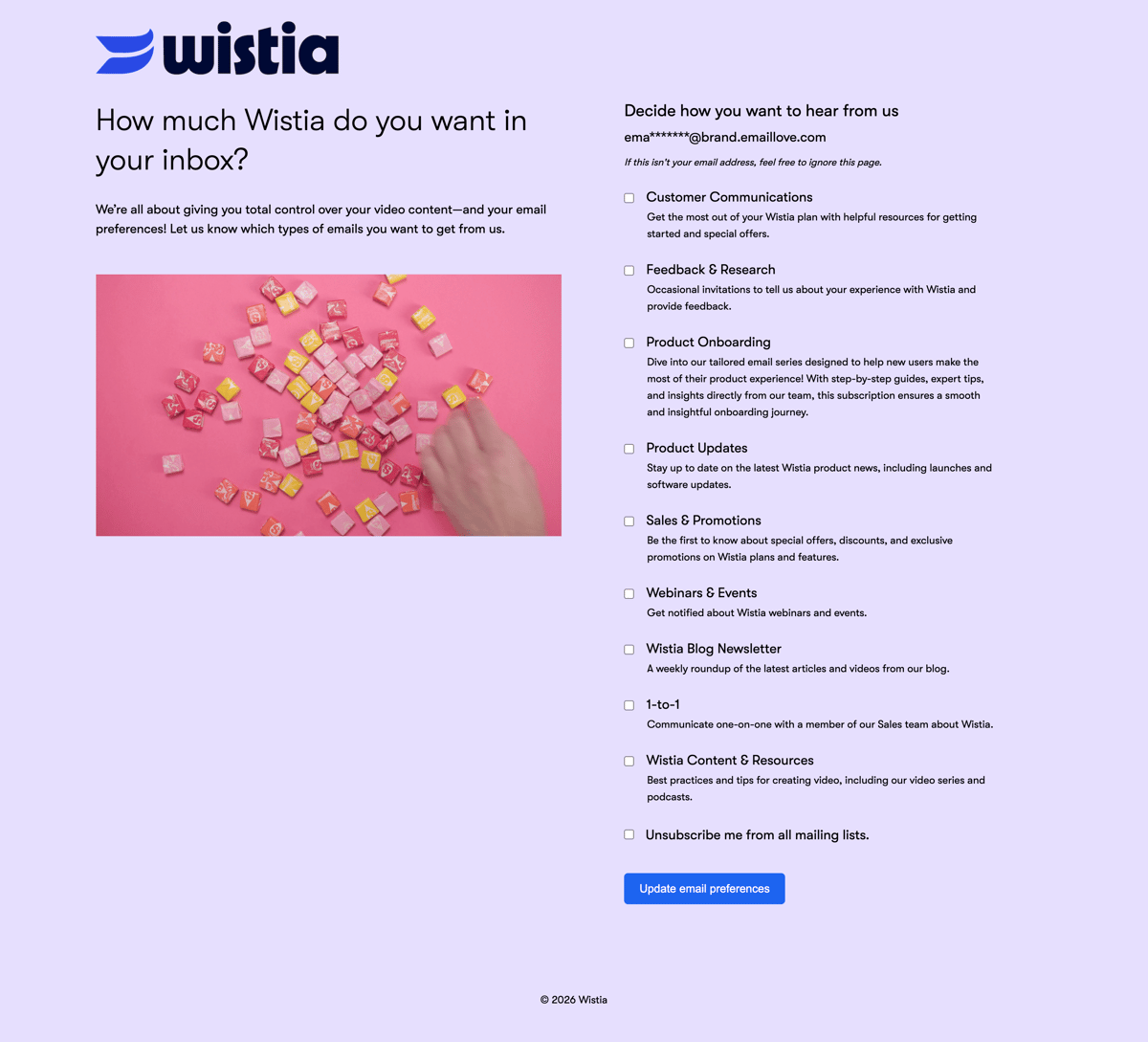
Keep the system of record member-controlled. Default to the principle that the member owns their addresses and you confirm changes, rather than the other way around. When you’re unsure, ask. It’s slower, but it’s the kind of slow that compounds into trust.
Zoom out: this is really an opt-in problem
Diana’s question is specific, but it sits on top of a much bigger principle, one worth internalizing because it answers a hundred questions like this one:
Consent is purpose- and channel-specific, and it doesn’t automatically transfer.
Permission a subscriber gave you to send course updates to their work email is not permission to send marketing to that address. And permission to email one address is not permission to email a different one. The moment you stretch consent beyond what was actually agreed to, you’re guessing on their behalf.
Get that principle right at the front door and most of these downstream dilemmas disappear. A few practices that make it real:
- Ask for explicit consent, no pre-checked boxes. A box the member has to actively check (not uncheck) is both the compliant move under GDPR and the honest one. People should opt in, not have to opt out of something they never chose.
- Set expectations at signup. Tell people what they’re subscribing to and roughly how often. “Monthly member newsletter” sets a very different expectation than a vague “stay in touch,” and it dramatically cuts later unsubscribes and spam complaints.
- Consider double opt-in. A quick confirmation step verifies the address is real, that someone is actually watching that inbox, and that they want mail there. It’s the cleanest possible answer to “is this address fair game?” because the member just told you it is.
- Document your consent. Record when, where, and how someone opted in. For a multi-platform sender especially, knowing that an address came from “2024 conference registration” versus “newsletter signup form” is the difference between confidence and guesswork.
- Honor the rules wherever your members live. CAN-SPAM (US), CASL (Canada), and GDPR (EU/UK) differ in the details, but they rhyme: be clear about who you are, only send what people agreed to, and make opting out effortless. If your members span borders, and for a national association they probably do, design to the strictest standard and you’ll rarely go wrong.
- Run a preference center and a sunset policy. Let people tune what they get instead of choosing between “everything” and “nothing.” And periodically retire addresses that have gone quiet. Protecting an old address by overwriting it with a fresh one is solving the wrong problem.
The takeaways
If you only keep five things from this one:
- Don’t overwrite a primary address without asking. Store the new one as an alternate.
- A “unified brand” feeling isn’t consent. Members may see you as one org, but they still divide their inboxes on purpose.
- Confirm intent with a one-click prompt before promoting any address to primary.
- A preference center is the real fix for any organization sending from multiple platforms about different things.
- Remember the principle underneath it all: consent is purpose- and channel-specific, and it doesn’t transfer on its own.
The instinct to keep things tidy with one address per member is a good one. Just make sure the tidying-up is something your members chose, not something that happened to them.
Got a question that’s been nagging at you? Send it to [email protected], and it might be featured in the next Reader Mail. And if you’re looking for thousands of real-world examples of welcome flows, preference centers, and opt-in emails done right, browse the Email Love inspiration library.
Email Love is not a law firm, and none of the above is legal advice. For anything touching GDPR, CASL, or CAN-SPAM specifics, loop in your privacy or legal team.
Much love,
Andy

Andy has spent two decades building email programs for brands and agencies, and now co-runs Email Love: the inspiration gallery of 485,000+ emails and the Figma plugin that lets teams design, build, and export production-ready email without leaving their design file. He writes about email design systems, production workflow, and where the industry is heading.

Customer.io delivers more impact from every message–unifying data, messaging, and AI into one platform so every customer interaction gets smarter over time. We help teams build personalized campaigns across email, SMS, push, in-app, and webhooks, using their own first-party data to reach the right people with the right message at the right moment. AI is built into the platform to remove the grunt work, letting marketers focus on strategy, not setup. Over 9,000 brands trust us to power their messaging.