
On this page · 5 min read
I had a conversation this week that’s been rattling around in my head.
Someone told me they think every email, in the not-too-distant future, will be hyper-personalized. No two people will receive the same message. AI will look at who you are, what you’ve clicked, what you bought, what mood it thinks you’re in, and spin up a one-of-one email just for you.
It’s a tidy vision of the future. And technically, sure, that world is possible.
But I don’t actually want to live in it. And I don’t think most marketers do either.
The same email, for everyone, on purpose
Most of the email we send is not, and shouldn’t be, one-to-one.
A newsletter is a campfire. Everyone gathers around the same fire and hears the same story. That’s the point. If I hyper-personalized the Email Love newsletter to every reader, I’d lose the thing that makes newsletters work in the first place: shared context, a shared voice, a shared moment.
Same goes for a sale announcement. A product launch. A holiday campaign. A founder’s note. These all work because everyone is getting the same message at the same time. Personalization at that layer is mostly cosmetic. The first name, maybe a region. Not a full content rewrite.
Ecommerce product recommendations? Sure, personalize away. Behavioral triggers? Of course. But the idea that every email should be a snowflake is a solution to a problem most marketers don’t have.
The actual question is different
A couple of weeks ago I wrote about AI and content, and I landed on this idea: taste is the moat.
It doesn’t matter whether AI helped you write something. Most content is being made with AI now, in some form or another. The question isn’t “did a human type every word?” It’s “does this have taste?” Good content is still good content. Bad content prompted into existence at scale is still bad content.
I still believe that. But I think there’s a second question stacking on top of it now:
Does this feel human?
Inboxes are starting to fill up with content that has the unmistakable smell of being written by nobody, for nobody, about nothing in particular. The replies are getting predictable. The subject lines are getting flat. Open the email and there’s no point of view inside it. Just words arranged in the correct order.
When that’s the average, the bar to stand out shifts. It’s not just about taste anymore. It’s about evidence that an actual person was involved.
What “human element” actually looks like
I’ve been collecting examples of brands doing this well. A few patterns are emerging.
1. The founder voice
Some brands are putting the founder directly in the email.
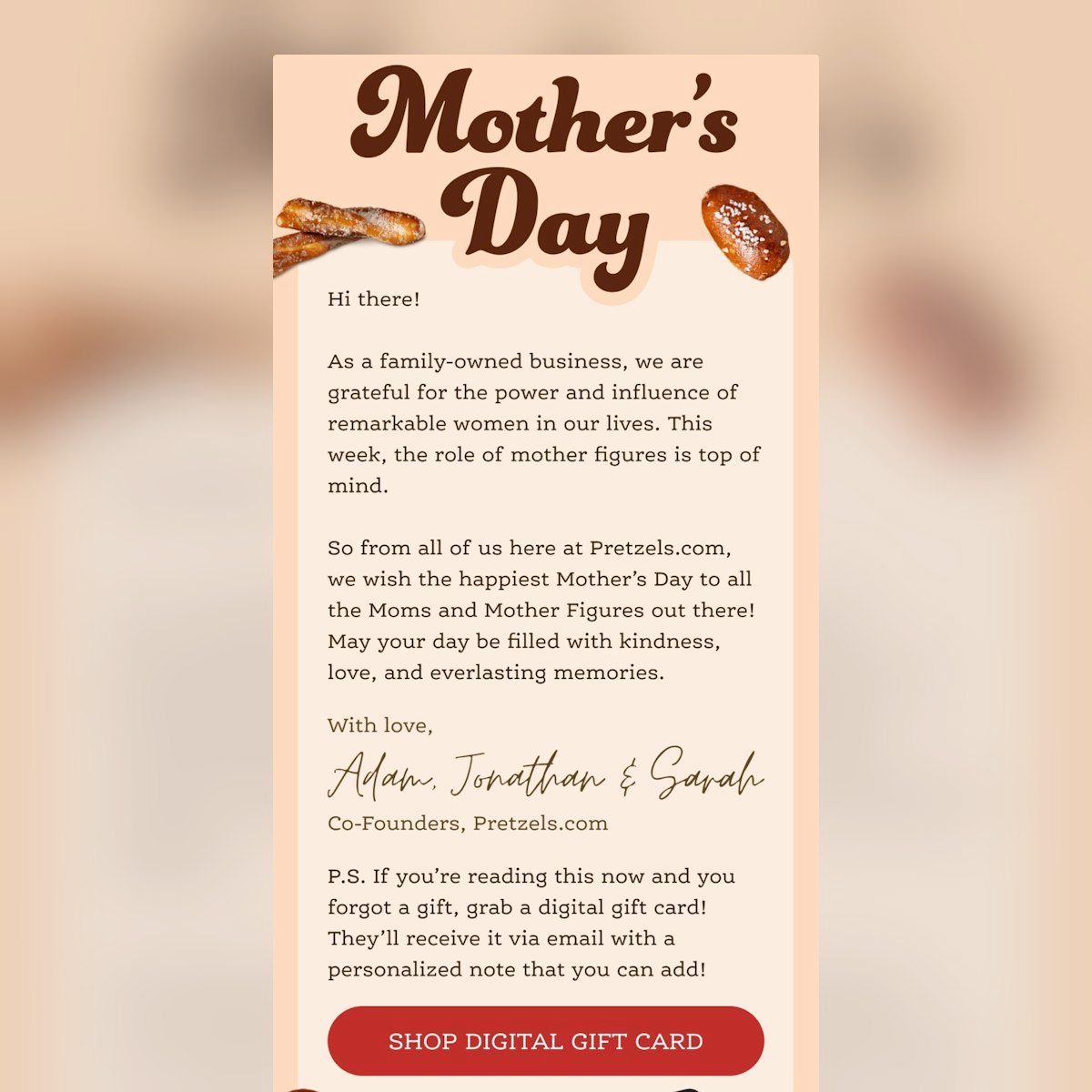
Pretzels.com sent a Mother’s Day email written from the founder, not “the team at Pretzels.com,” but a named human with a perspective. That’s a small move and it changes the entire feel of the inbox.
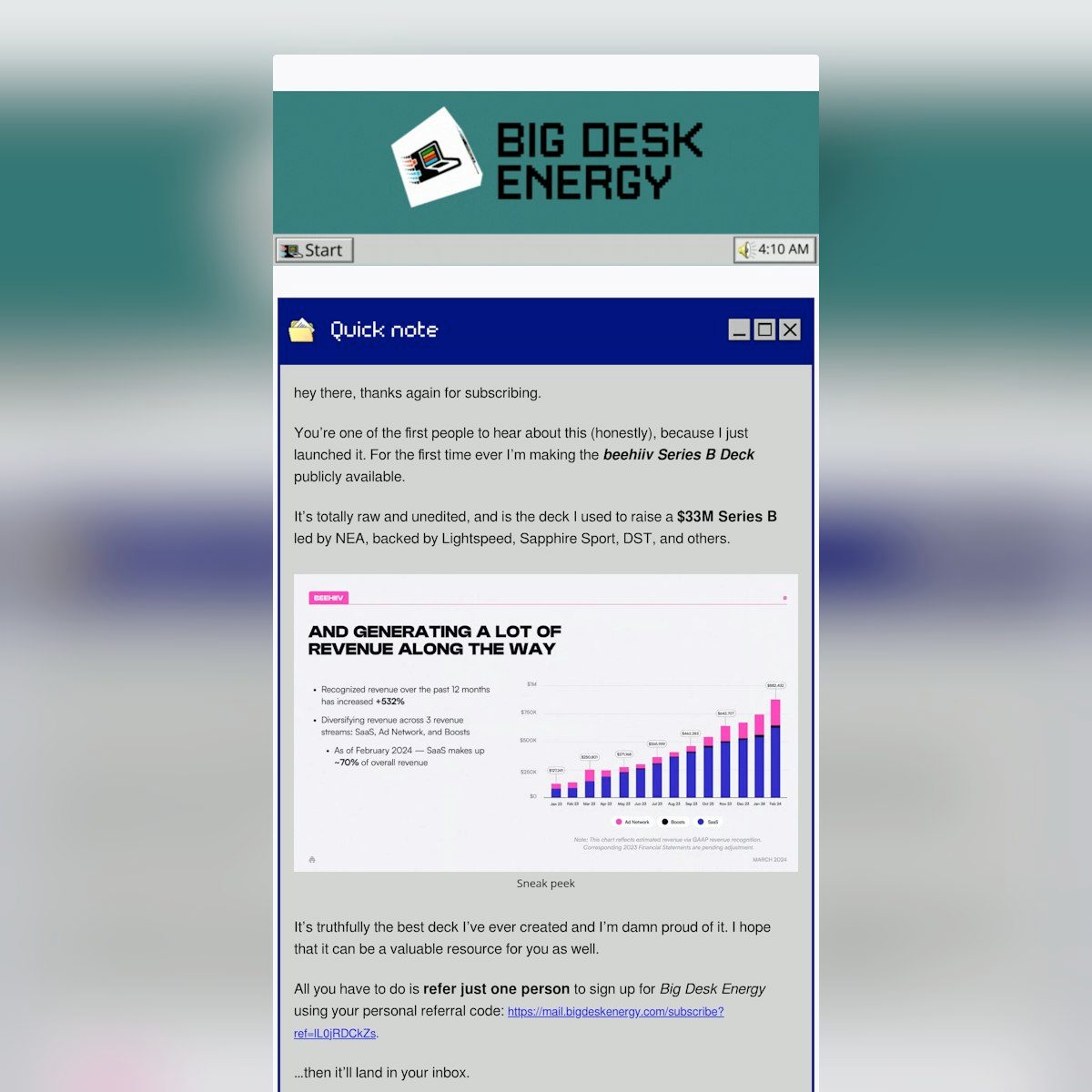
For SaaS, Tyler Denk’s “Big Desk Energy” newsletter from Beehiiv is a great example. It’s a founder writing publicly about building a company. Sometimes it’s about the product, mostly it isn’t. It builds an audience around a person, and that audience converts into Beehiiv customers as a side effect.
Not every brand has a founder who wants to write. Not every brand should. But if you do, use it.
2. Real customers, in the email
Tushbaby integrates real customer photos into their emails. Actual parents using the product, not models, not stock imagery. That does two things at once: it’s social proof, and it’s a constant reminder that the brand exists in the lives of real people.
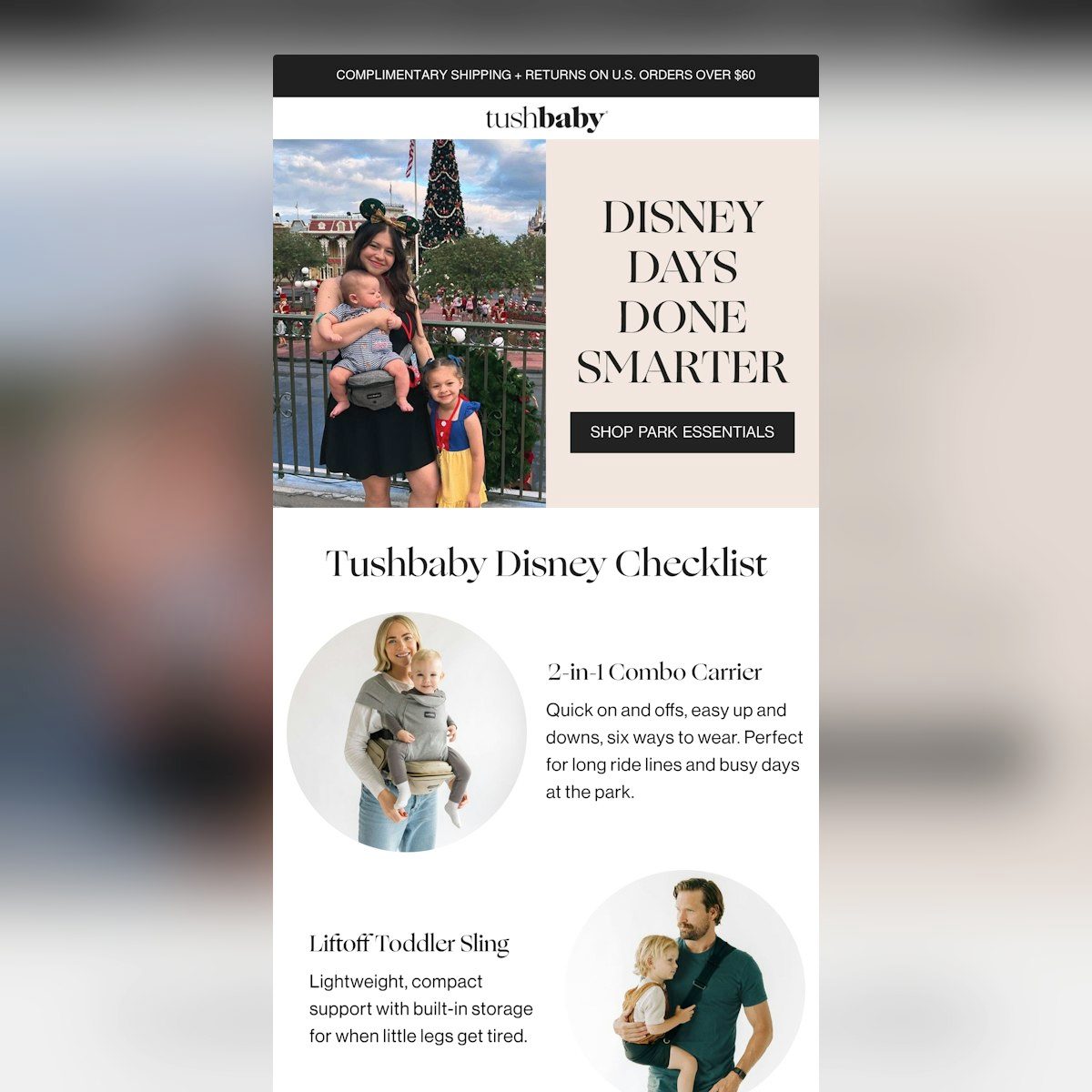
If your product is visual at all, your customers are creating better marketing assets for you than your studio is. Use them.
3. People from your community
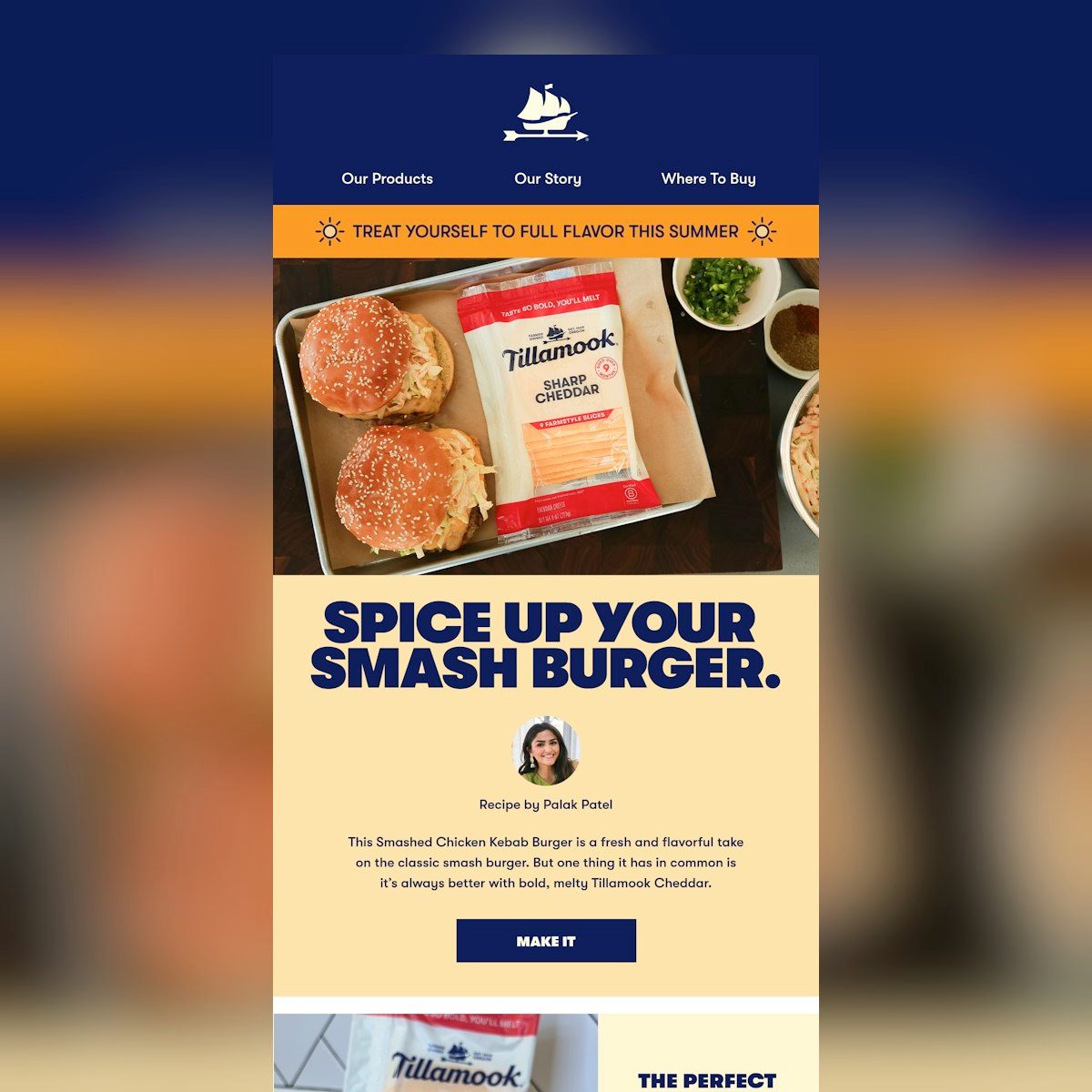
Tillamook does this well. They feature recipes from chefs and people in their community, with names and faces attached. When you read the email, you’re not reading “Tillamook.” You’re reading a recipe from a specific person Tillamook chose to put a spotlight on.
Material did something similar for AAPI Heritage Month with an interview-style email featuring chef Brandon Jew. The interview format is great here. It pulls a real human voice into the email without requiring you to be that human.
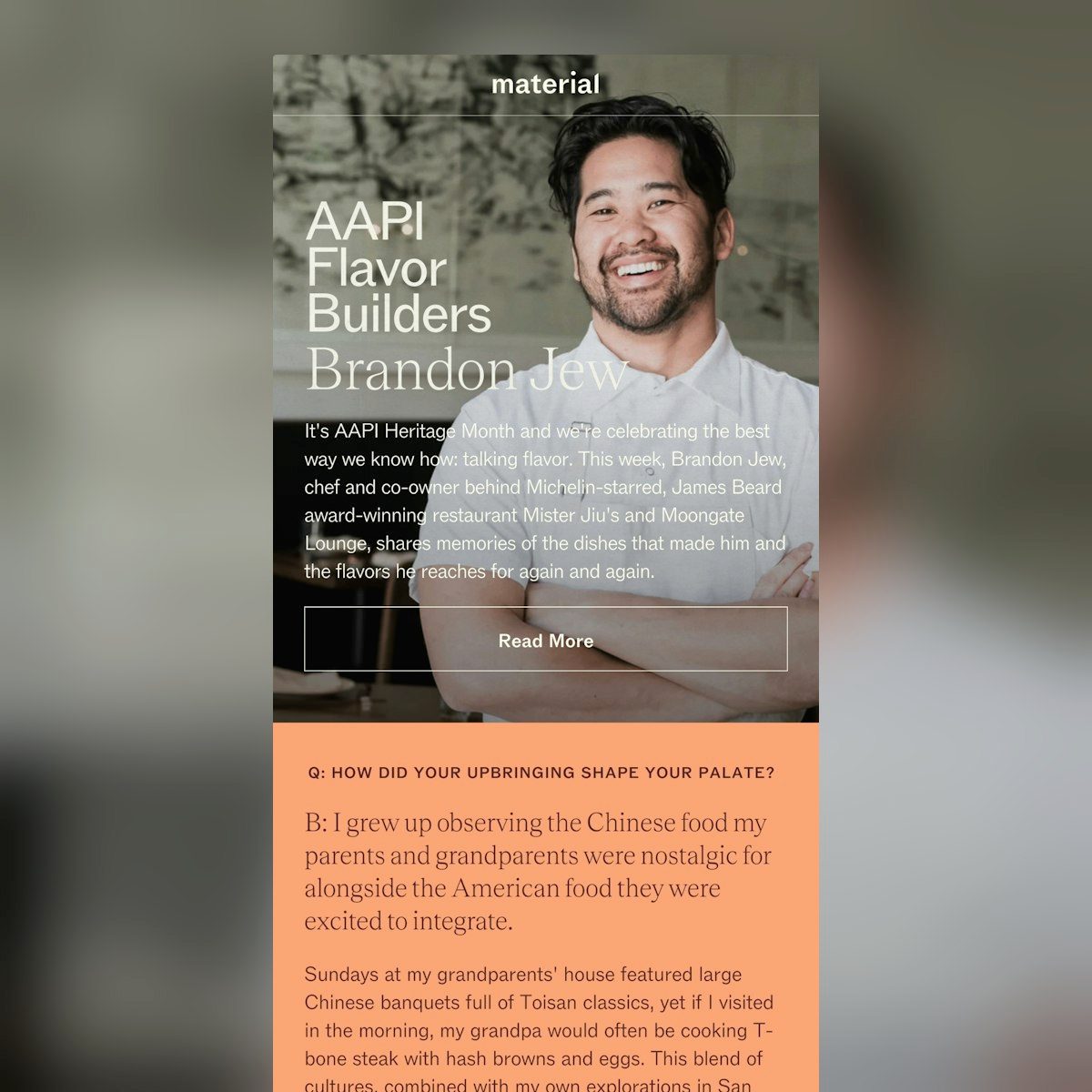
The email isn’t from a person. But it’s clearly about people. That’s enough.
The reframe
Here’s the part I keep landing on: it isn’t strictly about emails coming from a named human. It’s about whether real humans show up inside the email at all.
A face. A name. A quote. A story. A point of view. An opinion someone could disagree with. Anything that signals: a person was here.
That’s the signal readers are starting to scan for, consciously or not. And it’s the signal an AI prompt with no taste behind it can’t fake.
Where AI fits
None of this is anti-AI. I’m not telling you to write every email by hand from a leather notebook.
AI can absolutely help you draft, design, produce, and ship these emails faster. It can turn a 30-minute interview into a clean Q&A email in five minutes. It can take a founder’s voice memo and shape it into a newsletter. It can help your team scale the work.
What it can’t do is decide who you put in the spotlight. Which customer story is the right one this week. What opinion is worth taking. Whose face belongs in the hero image.
That’s the human work. That’s the taste layer. That’s the moat.
The brands that are going to win attention over the next few years won’t be the ones that opted out of AI. They’ll be the ones that used AI to scale the production, and used their own taste to decide what was worth producing, and which actual humans were worth featuring.
Three things to try this month
- Pick a face for your brand. Founder, marketer, head chef, lead designer. Someone real whose voice can show up in your emails on a regular cadence.
- Build one customer or community feature into your existing program. It doesn’t need to be a new flow. Add a “from a real customer” slot to your existing newsletter.
- Use AI to scale the production, not the voice. Let it draft, format, resize, and translate. Don’t let it decide what your brand thinks.
Taste is still the moat. Humanity is the signal. The combination of both is where the next great email programs are going to come from.
Want more examples of brands using the human element well? Email Love Pro members get our full library of curated emails, journeys, and breakdowns. Check it out here.
Much love,
Andy

Andy has spent two decades building email programs for brands and agencies, and now co-runs Email Love: the inspiration gallery of 491,000+ emails and the Figma plugin that lets teams design, build, and export production-ready email without leaving their design file. He writes about email design systems, production workflow, and where the industry is heading.

Customer.io delivers more impact from every message–unifying data, messaging, and AI into one platform so every customer interaction gets smarter over time. We help teams build personalized campaigns across email, SMS, push, in-app, and webhooks, using their own first-party data to reach the right people with the right message at the right moment. AI is built into the platform to remove the grunt work, letting marketers focus on strategy, not setup. Over 9,000 brands trust us to power their messaging.